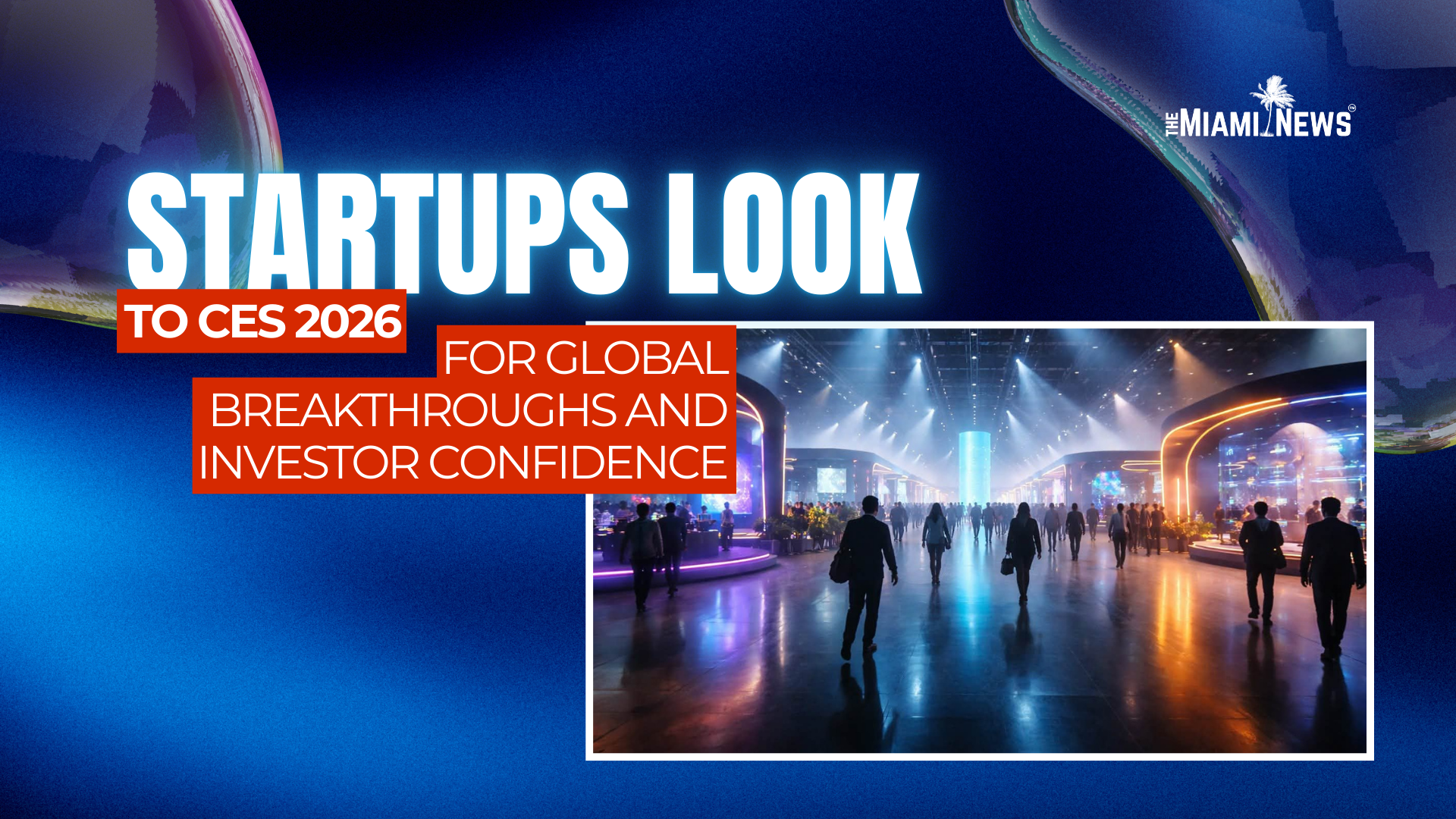
For startups and emerging technology companies, CES 2026 is more than a product showcase. It has become one of the most important global stages for attracting investors, building partnerships, and proving long term business potential.
The annual technology conference in Las Vegas drew more than 135,000 attendees this year, including a record number of startups from Asia, Latin America, Europe, and the Middle East. Founders arrived with ambitious products powered by artificial intelligence, robotics, sustainability technology, and next generation consumer devices.
“CES is where startups prove they are ready for the global market,” said Andre Tavarez, founder of a Brazilian agricultural technology company that debuted an AI powered irrigation system at the event. “Investors are not just looking for ideas anymore. They want scalable businesses with real world impact.”
Artificial intelligence dominated much of the exhibition floor. Startups showcased AI assistants for education, predictive healthcare tools, personalized shopping platforms, and generative software designed for architecture and industrial design. Many young companies focused on practical AI applications rather than experimental concepts, reflecting investor demand for commercially viable technology.
Sustainability innovation also played a major role. Companies introduced modular batteries, home energy systems, water conservation devices, and carbon reduction technology designed to address climate related challenges. Analysts noted that environmentally focused startups received some of the strongest investor attention during the conference.
For many early stage businesses, CES now serves as a shortcut to international expansion. Founders are increasingly using the event to secure licensing agreements, distribution deals, and strategic partnerships across multiple markets at once. Companies from emerging economies, in particular, see CES as an opportunity to gain global visibility that would otherwise be difficult to achieve.
Venture capital firms remained highly active throughout the conference, although investor priorities have shifted. Rather than chasing speculative growth, many firms are focusing on startups that demonstrate profitability potential, operational discipline, and regulatory readiness.
In 2026, CES continues to evolve beyond a consumer electronics exhibition. It has become a global launchpad where startups compete not only for attention, but for credibility, investment, and the opportunity to shape the future of technology.






Be First to Comment