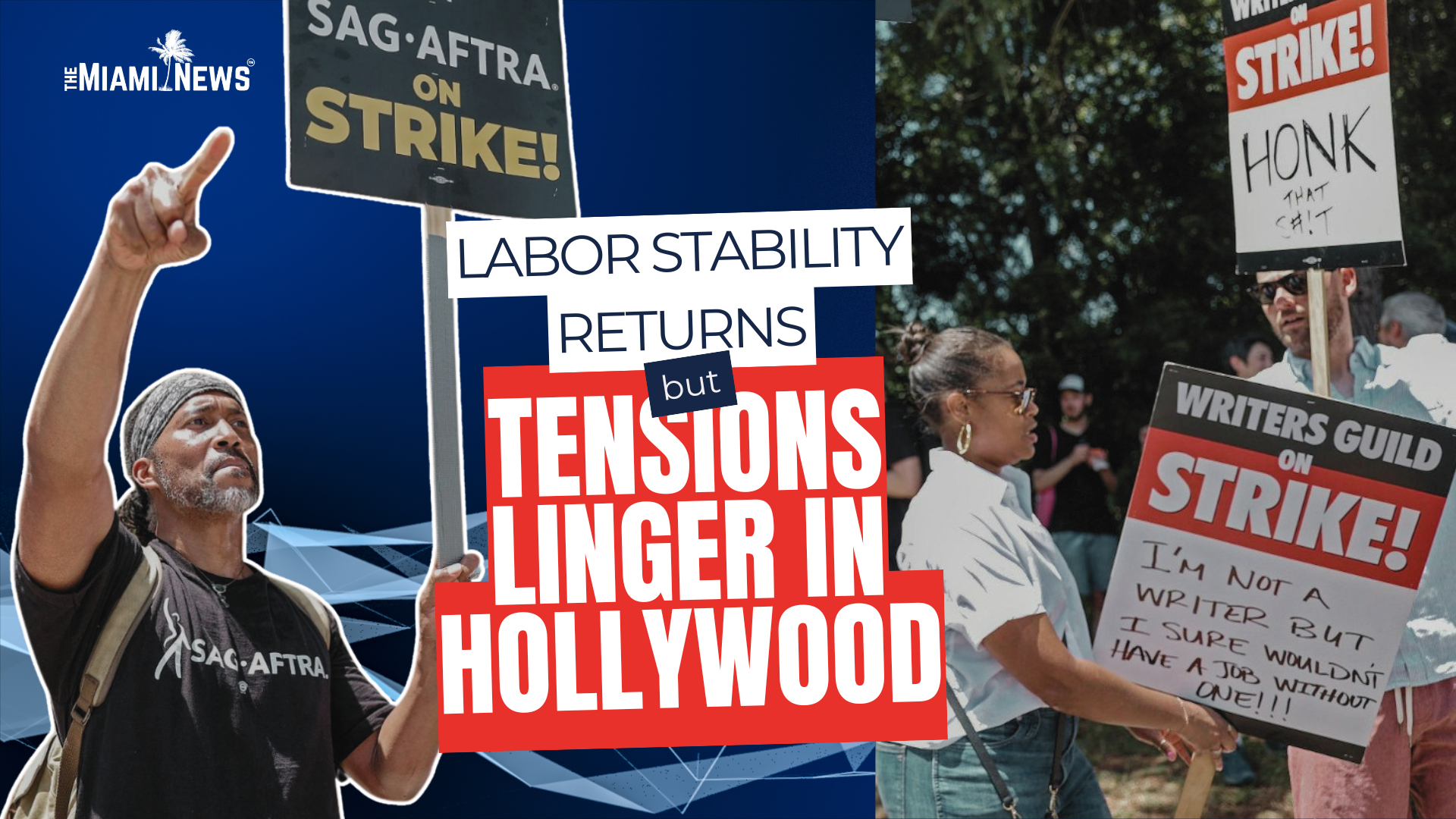
After historic strikes, unions and studios operate under new agreements, though underlying conflicts remain unresolved.
LOS ANGELES, CA — Nearly three years after the dual strikes by writers and actors halted Hollywood production, the industry has returned to relative stability, but tensions over compensation, streaming residuals, and AI continue to simmer.
The 2023 strikes by the Writers Guild of America and SAG-AFTRA marked one of the most significant labor disruptions in decades. New contracts secured increases in minimum pay, improved residual structures tied to streaming performance, and protections against AI misuse.
Production levels have since rebounded, with major studios ramping up film and television output throughout 2025 and into 2026. Soundstages in Los Angeles and Atlanta are once again operating at near full capacity.
Yet labor leaders caution that the agreements represent a starting point rather than a resolution. “We achieved critical protections, but the industry is evolving faster than contracts,” said a union representative in a recent panel discussion.
Streaming residuals remain a key issue. Unlike traditional television, where ratings are publicly available, streaming platforms often limit access to viewership data. This lack of transparency complicates compensation models for writers and actors.
At the same time, below-the-line workers, including crew members, continue to advocate for better working conditions and hours. The International Alliance of Theatrical Stage Employees has pushed for stricter enforcement of safety and scheduling standards.
Studios, for their part, face financial pressures that limit their willingness to expand compensation structures significantly. Balancing labor demands with profitability goals remains a central challenge.
Hollywood may have returned to work, but the underlying negotiations between labor and capital are far from settled. The next contract cycle could prove just as pivotal as the last.








Be First to Comment