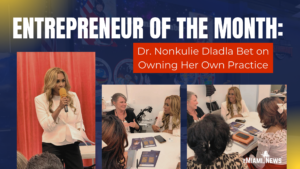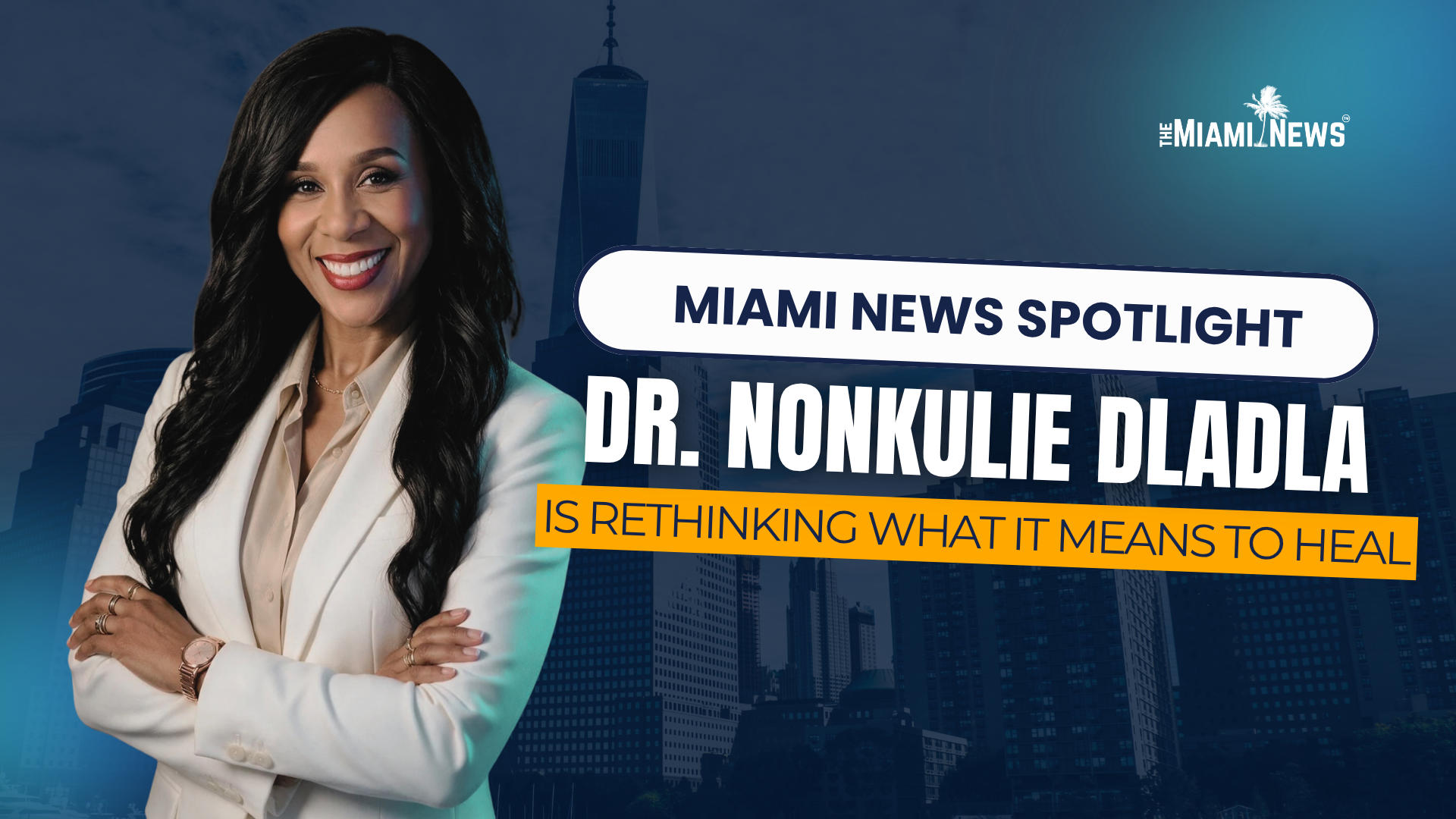
After more than two decades in conventional medicine, the Cornell-trained physician behind Gramercy Regenerative Medicine is building a practice around a broader question: not simply how long people live, but how well they can live.
NEW YORK — Dr. Nonkulie Dladla spent more than 20 years practicing medicine before her own experience as a patient pushed her to reconsider some of the assumptions at the center of her profession.
Today, as the CEO and owner of Gramercy Regenerative Medicine in New York City, Dladla describes her work as an intersection of internal, functional, regenerative and longevity medicine. Her focus is “healthspan,” helping patients pursue years characterized not merely by longevity, but by energy, clarity and the ability to participate fully in their lives.
Her path to medicine was itself unconventional.
Dladla says she entered college studying history and religion without taking science courses and once imagined a future devoted to meditation and spiritual practice.
“She’d be stunned to find out I became a doctor at all,” Dladla said of her younger self.
An eventual realization that medicine could also become a form of service changed her direction. She returned to school to complete the science coursework she needed before attending Cornell University Medical College.
Years later, another shift would be far more personal.
Dladla recalls experiencing profound exhaustion despite laboratory results that repeatedly appeared normal. She understood the clinical dilemma from both sides. As a patient, she knew she did not feel well. As a conventionally trained physician, she knew that without a recognizable diagnosis, there were limits to what the traditional framework could explain.
That experience drew her toward functional and regenerative approaches and ultimately changed the direction of her career.
Dladla also connects that evolution to her fertility experience. She says she was warned in her early 40s that conceiving would be unlikely, but later became pregnant twice without fertility assistance, at ages 42 and 44. She is careful not to present her experience as a prediction of what another patient might experience.
“I share this not as a promise of what will happen for someone else,” she said, “but as the experience that convinced me the body holds far more capacity for healing than conventional medicine credits it for.”
That distinction matters in a field increasingly crowded with sweeping longevity claims.
Dladla herself pushes back against the idea that sophisticated medical care can be reduced to social-media advice or a generic protocol copied from an influencer.
“A wellness influencer is not a doctor,” she said.
She argues that longevity treatment should be individualized, based on appropriate diagnostics and overseen by trained medical professionals capable of evaluating how a patient responds over time.
At Gramercy Regenerative Medicine, Dladla says her approach can incorporate bioidentical hormone therapy, peptide protocols, nutraceuticals and regenerative treatments alongside conventional medical knowledge. She also emphasizes nervous-system regulation, lifestyle and the patient’s broader experience of health.
Her practice has developed partnerships with organizations including Genesis RPA, Cell Life USA and Sollis, which Dladla says are part of an effort to create a more coordinated network of care.
The practice deliberately limits the number of patients seen each day, she said, allowing more time for conversation and individualized treatment planning.
Her days begin far from the clinical rush.
Dladla starts with gratitude and meditation, followed by her own wellness routine and breakfast before spending time with her children and heading to work. She listens to audiobooks during her commute and takes another moment to ground herself upon arriving at the office.
There is also a spiritual dimension to how she understands health.
Dladla says she comes from a lineage of both medical and traditional healers and practices Reiki and energy healing. Her interest in the relationship among biology, mindset and human experience sits alongside, rather than replacing, her conventional medical training.
Her philosophy of success follows a similar balance between vision and action.
Dladla rejects the idea that transformation simply appears overnight.
“Vision without effort is just a wish,” she said.
She learned that lesson while establishing her practice. Deals and partnerships fell through, sometimes delaying plans by months or years. Rather than interpreting each setback as evidence that the larger vision was wrong, Dladla says she eventually learned to treat failure as information.
The same principle informs the advice she gives people interested in improving their health: begin with foundations rather than immediately reaching for the most advanced intervention.
Her broader ambitions now extend beyond one Manhattan practice. Dladla is working on a book and exploring how her model might eventually reach additional communities, including Miami.
But she says expansion must not come at the expense of individualized care.
“The vision is clear,” she said: build a model that can scale “without losing the personalized, physician-guided care at its core.”
For Dladla, that may be the central tension confronting the booming longevity industry itself. New therapies, technologies and ideas will continue arriving. The harder challenge is deciding which tools belong with which patient and remembering that extending life and restoring a person’s experience of living it are not necessarily the same thing.
THE MIAMI NEWS SPOTLIGHT
Name: Dr. Nonkulie Dladla, M.D., M.S.
Role: CEO and Owner
Company: Gramercy Regenerative Medicine
Based: New York City
Focus: Internal, functional, regenerative and longevity medicine
Website: gramercyregenmed.com
What’s Next: A forthcoming book and potential expansion through additional locations and partnerships.