Digital platforms, international talent and cross-border financial networks are changing where businesses are created, how they grow and who benefits from their success.
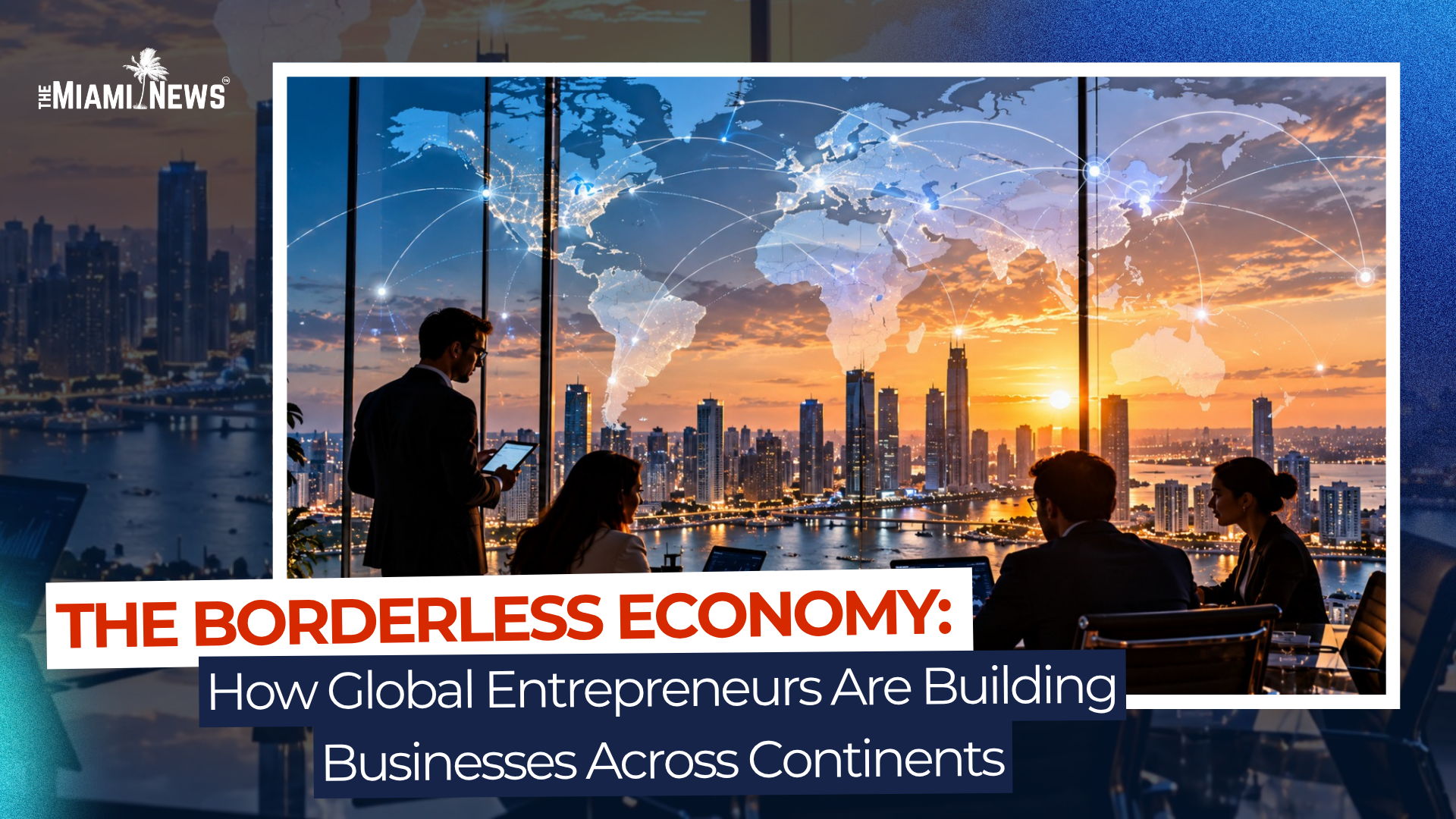
The traditional geography of business is being challenged by a new generation of entrepreneurs who operate across countries without necessarily maintaining large international offices. A company may be incorporated in the United States, employ designers in Europe, work with developers in Asia and serve customers throughout Latin America. This increasingly distributed model of commerce is changing the meaning of a local business and creating opportunities for smaller companies to compete internationally.
Cross-border economic relationships are not new. International trade, migration and investment have connected markets for centuries. What distinguishes the digital era is the relative ease with which businesses can coordinate services, communicate with customers and organize work across long distances.
For entrepreneurs, international expansion no longer always requires substantial physical infrastructure. But digital access does not eliminate the legal, financial and cultural complexities of operating globally.
A new geography of opportunity
Traditional multinational corporations built international operations through subsidiaries, factories and regional headquarters.
Smaller companies often lacked the capital to follow that model.
Cloud computing, online payment systems, digital marketplaces and remote collaboration have lowered some of those barriers. A specialized consulting firm can serve clients in several countries, while a small consumer brand can reach international buyers without establishing a conventional retail network.
These opportunities are particularly important in regions where access to domestic capital or customers may be limited.
An entrepreneur in the Caribbean, for example, may be able to sell professional services to clients in North America. A Latin American technology company may recruit internationally while retaining its principal operations at home.
Yet the borderless economy remains uneven.
Reliable internet access, payment infrastructure, language skills and regulatory stability continue to influence which businesses can participate successfully.
The importance of money moving across borders
The significance of international financial networks extends far beyond corporate investment.
According to World Bank estimates published in December 2024, officially recorded remittances to low- and middle-income countries were expected to reach $685 billion that year.
The World Bank estimated that India would receive approximately $129 billion, followed by Mexico with $68 billion, China with $48 billion, the Philippines with $40 billion and Pakistan with $33 billion.
These transfers, often sent by workers to relatives in their countries of origin, illustrate the economic importance of international connections.
Remittances are not equivalent to business investment, but they help support household spending, education and financial stability. In some communities, money received from abroad can also provide resources for small enterprises.
Their scale demonstrates that economic globalization is shaped not only by corporations and financial institutions, but also by individuals maintaining relationships across national borders.
Miami as an international commercial bridge
Miami offers a particularly relevant example of the opportunities associated with cross-border business.
The city has long benefited from its geographic position, multilingual workforce and commercial relationships with Latin America and the Caribbean.
Its international character can help entrepreneurs develop professional networks, reach foreign customers and understand regional business practices.
For companies seeking access to both U.S. and Latin American markets, Miami can function as a place to coordinate investment, professional services and commercial partnerships.
However, location alone does not guarantee success.
Businesses expanding internationally must navigate different tax systems, consumer-protection rules, employment laws and banking requirements. Currency movements can also affect profitability, particularly when revenues and operating expenses are denominated in different currencies.
Entrepreneurs who underestimate these complexities may discover that international growth introduces risks faster than it generates revenue.
The challenge of building trust
Digital technology makes communication easier, but trust remains central to international commerce.
A company entering a new market must understand local customer expectations, contractual practices and cultural norms.
Successful expansion frequently depends on reliable local partners who can interpret conditions that are difficult to understand from a distance.
This is especially important for small companies without extensive legal or compliance departments.
Cybersecurity presents another concern. International operations may expose businesses to different data-protection requirements and increase the number of systems through which sensitive information passes.
As a result, the borderless business model often requires more sophisticated governance than its relatively simple digital appearance suggests.
A more connected, but not necessarily equal, economy
The expansion of cross-border entrepreneurship could allow more individuals to participate in international markets.
It could also reinforce existing inequalities if access remains concentrated among those with financial resources, education and strong digital infrastructure.
Governments and financial institutions therefore face an important policy challenge: making international commerce more accessible while maintaining effective safeguards against fraud, exploitation and financial crime.
The future of entrepreneurship may depend less on where a company is physically located and more on the networks, knowledge and trust it can build.
For ambitious founders, the world offers a larger potential marketplace than ever before. The enduring challenge is turning that access into a sustainable business that creates value on both sides of the border.
Source: World Bank, Migration and Development Brief research and December 2024 remittance estimates.