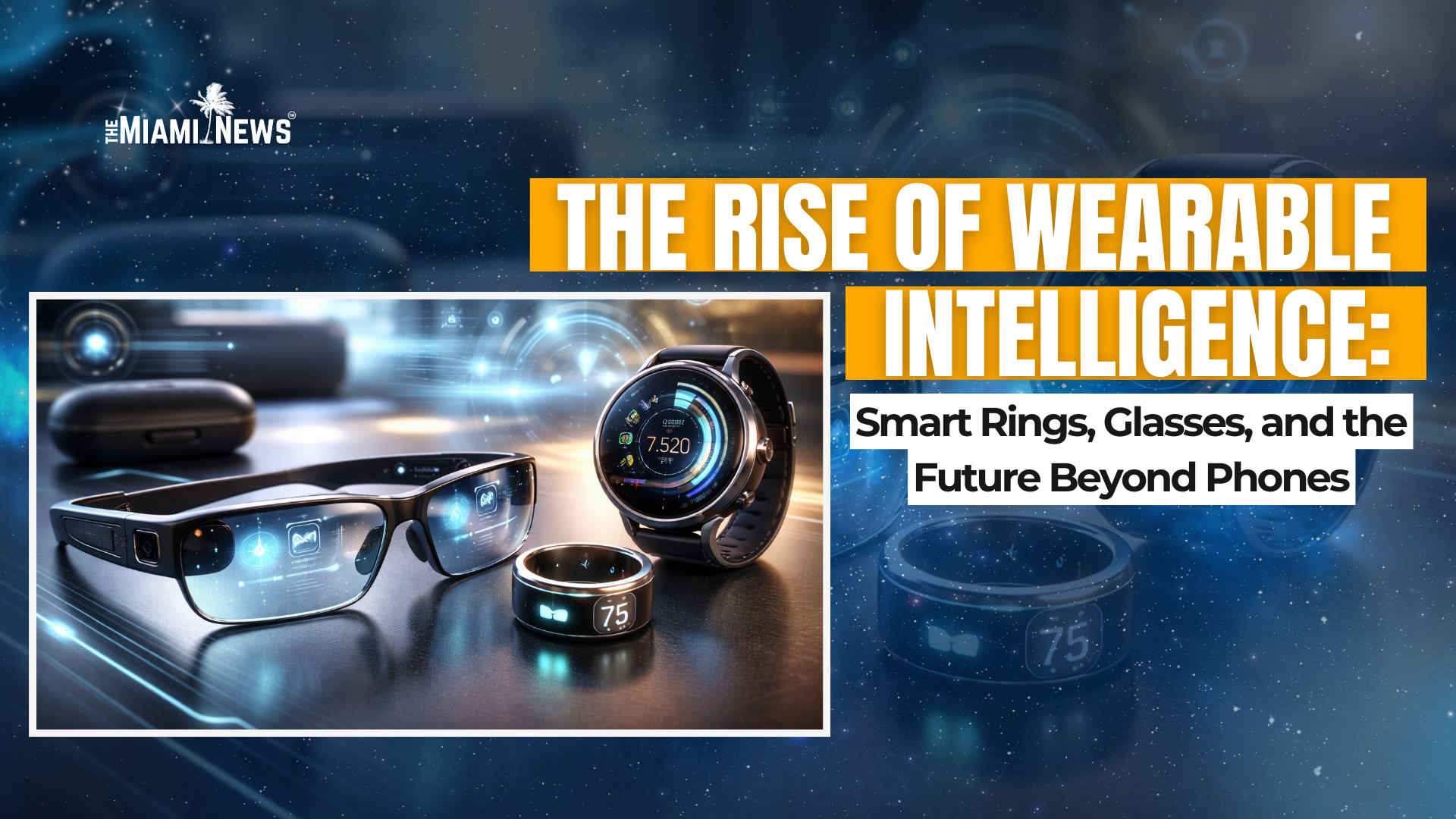
In 2026, the center of personal computing is shifting from screens to senses. Smart rings, AI glasses, and biometric patches are leading a quiet revolution in how people interact with technology, gradually reducing dependence on smartphones.
Wearable devices are no longer niche accessories. They are evolving into full scale platforms powered by artificial intelligence, capable of supporting health tracking, communication, productivity, and ambient interaction. According to IDC, global shipments of advanced wearables are expected to surpass 400 million units in 2026, representing a major increase from the previous year.
Smart rings are at the forefront of the trend. Companies like Oura, Samsung, and startup PulseLoop have introduced wearable rings capable of monitoring sleep quality, stress levels, hydration, fertility, and heart rate through discreet biometric sensors. These devices are increasingly marketed as wellness companions rather than simple fitness trackers.
AI powered smart glasses are also gaining momentum. Meta’s latest wearable glasses and Apple’s VisionOS 2.0 platform now offer real time translation, voice activated assistance, navigation overlays, and contextual information directly within the user’s field of vision. Unlike earlier attempts at smart eyewear, the latest designs prioritize both social comfort and everyday practicality.
“People want technology that fits naturally into their lives,” said Yasmin Patel, a design strategist at Form and Function Labs. “Wearables are succeeding because they make computing feel invisible, intuitive, and personal.”
One of the biggest advancements is the integration of on device artificial intelligence. Many wearables can now process information locally, provide personalized recommendations, and learn user behavior without relying entirely on cloud connectivity or smartphones.
The healthcare industry is already exploring the benefits. Hospitals and clinics are testing wearable devices for continuous patient monitoring, while employers are experimenting with productivity and wellness tools designed to track focus and stress levels. Athletes are also using adaptive wearables that respond to fatigue and optimize recovery in real time.
Still, the rapid growth of wearable technology raises concerns about privacy, consent, and data ownership. Experts warn that as devices become more predictive and intimate, users will need stronger protections around how their biometric information is collected and shared.
In 2026, wearable technology is no longer just about convenience. It represents a major shift in human machine interaction, where computing becomes increasingly seamless, personalized, and embedded into daily life.






Be First to Comment