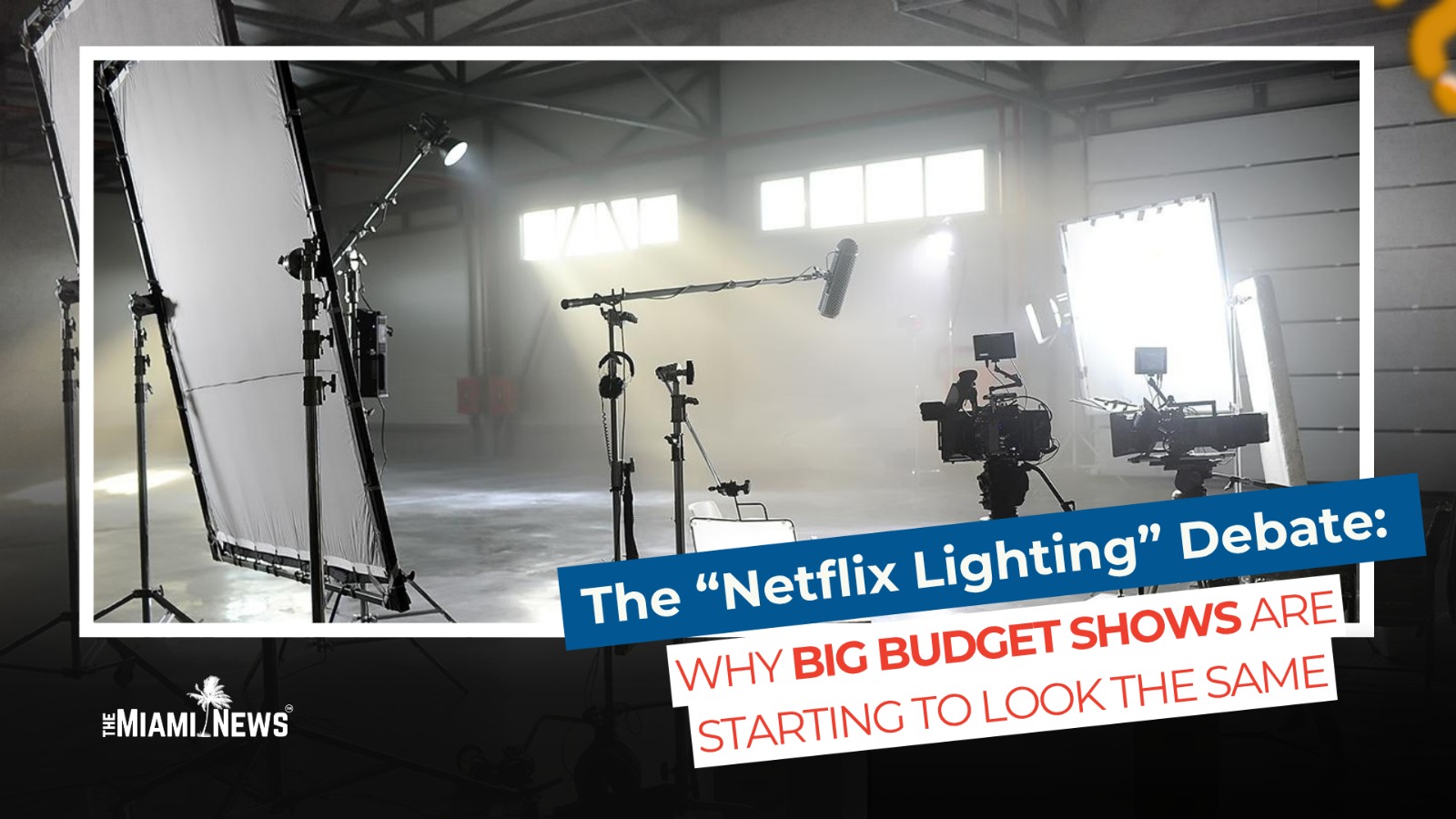
A growing critique in the industry suggests that efficiency-driven lighting techniques are flattening the visual identity of modern streaming content.
MIAMI — A quiet but increasingly vocal debate is spreading through Hollywood and the broader filmmaking community. The term “Netflix lighting” has entered industry vocabulary, used to describe a visual style that critics say is making high-budget productions look flat, uniform, and emotionally muted.
The criticism centers on lighting techniques that prioritize clarity and consistency across devices. With content now viewed primarily on phones, tablets, and televisions under varying conditions, productions often rely on soft LED lighting setups that minimize shadows and reduce contrast.
The result is technically clean but artistically restrained. Scenes appear evenly lit, but some filmmakers argue they lack depth, mood, and visual tension.
Cinematographers point to practical reasons behind the shift. LED lighting allows for faster setups, lower energy consumption, and fewer reshoots. It also reduces the risk of compression issues during streaming, where darker scenes can appear grainy or “fuzzy” after encoding.
However, the tradeoff has become more visible to audiences. Social media discussions and industry forums have increasingly highlighted the sameness across different shows, regardless of budget or genre.
The debate reflects a broader tension in the streaming era. As production pipelines become more optimized for scale and efficiency, the artistic choices that once defined cinema are being reconsidered through a technological lens.
For filmmakers, the challenge moving forward will be balancing the demands of global streaming platforms with the visual storytelling techniques that make a project distinctive.






Be First to Comment