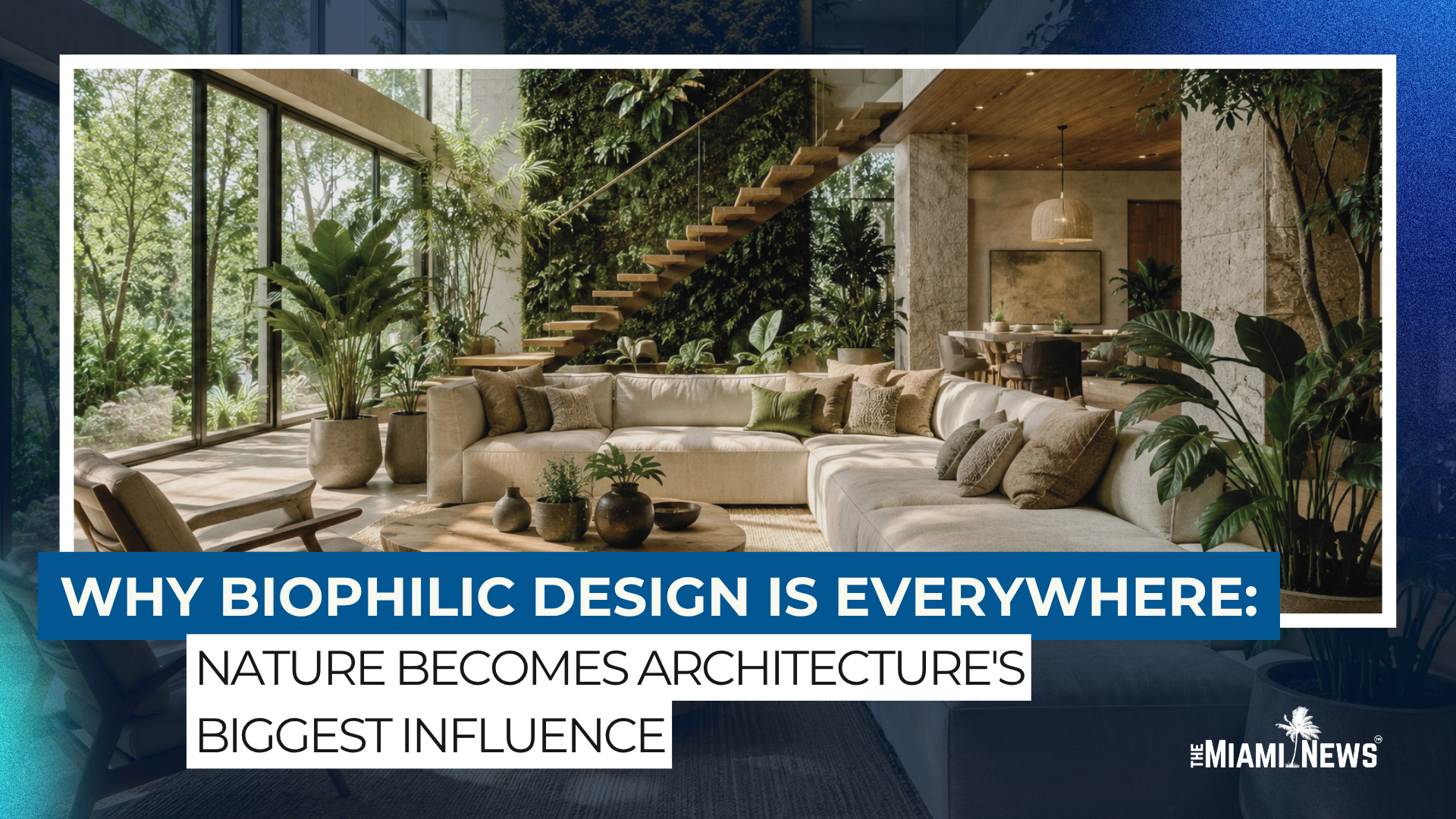
Designers are increasingly integrating natural materials, greenery, and organic forms into homes and workplaces as demand for healthier environments grows.
Modern cities continue to expand, yet many people feel increasingly disconnected from nature.
Architects and designers believe they have found a solution.
Biophilic design, a philosophy that incorporates natural elements into built environments, has become one of the most influential trends in architecture and interior design.
The concept extends beyond adding plants to a room. Designers use natural light, organic materials, water features, and outdoor views to create spaces that foster well-being and productivity.
Corporate offices, luxury residences, hotels, and public buildings are embracing the approach. Research suggests that exposure to natural elements may improve mood, concentration, and overall satisfaction.
Developers view biophilic design as both a wellness feature and a competitive advantage. Properties that offer strong connections to nature often attract premium pricing and higher demand.
The trend is particularly visible in warm-weather cities where indoor-outdoor living can be integrated seamlessly into daily life.
Architects argue that the future of urban development depends on balancing growth with human needs.
The buildings of tomorrow may succeed not because they separate people from nature, but because they bring nature inside.