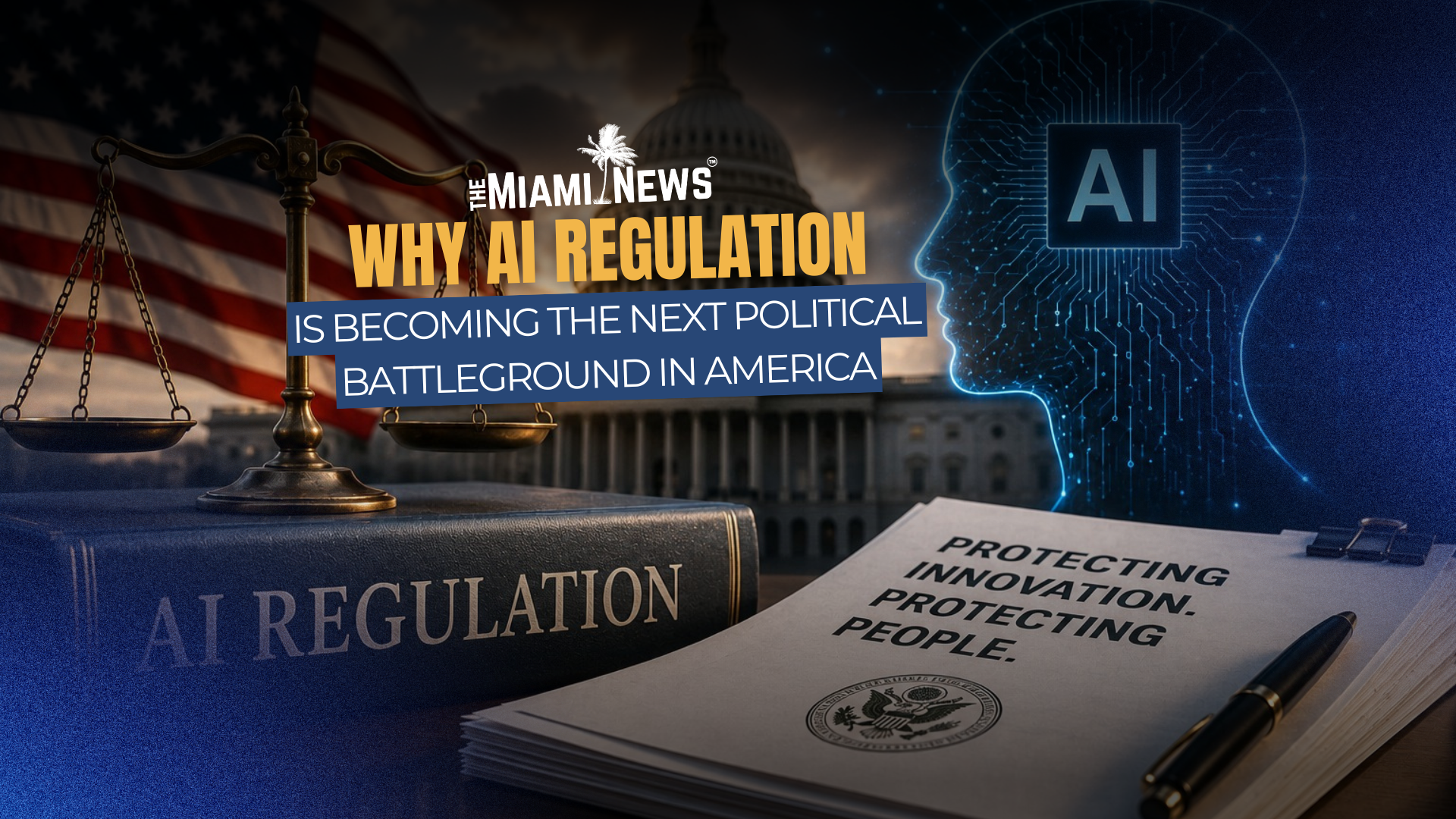
As artificial intelligence reshapes industries, lawmakers, technology companies, and advocacy groups are competing to define the rules that will govern one of the most influential technologies of the 21st century.
Artificial intelligence has moved from research labs into everyday life at an extraordinary pace, transforming industries ranging from healthcare and finance to education and entertainment. As AI systems become more powerful and widely adopted, policymakers across the United States are intensifying efforts to establish regulations that encourage innovation while protecting consumers, businesses, and national security. The debate is rapidly emerging as one of the defining political issues of the decade.
Technology companies have invested billions of dollars into developing advanced AI models capable of generating text, images, software code, and complex analysis. Businesses are increasingly using these tools to improve productivity, automate repetitive tasks, and create new products and services. While supporters argue that AI will drive economic growth and create new opportunities, critics warn that the technology also presents risks that require thoughtful oversight.
One of the biggest concerns involves transparency and accountability. Lawmakers are examining whether companies should be required to disclose when AI is used to create digital content or make important decisions affecting employment, healthcare, lending, and public services. Consumer advocates argue that individuals deserve to know when algorithms influence decisions that may significantly impact their lives.
Privacy has also become a central issue in the regulatory discussion. Many AI systems rely on enormous amounts of data to improve their performance, raising questions about how personal information is collected, stored, and used. Privacy experts continue to push for stronger safeguards that protect consumer data while allowing responsible innovation to continue.
The rapid growth of AI-generated content has created additional challenges. Deepfake videos, synthetic voices, and realistic digital images have become increasingly sophisticated, making it more difficult for the public to distinguish authentic content from fabricated material. Election officials, cybersecurity experts, and law enforcement agencies have expressed concern that these technologies could be used to spread misinformation, manipulate public opinion, or facilitate fraud.
Businesses are closely monitoring the evolving regulatory landscape. Large technology companies generally support clear national standards that provide consistency across industries, although many caution that overly restrictive regulations could slow innovation and reduce America’s global competitiveness. Smaller technology firms have also emphasized the importance of creating rules that encourage competition rather than placing excessive compliance burdens on startups.
National security remains another major factor shaping the conversation. Government agencies are evaluating how AI can strengthen cybersecurity, intelligence analysis, and defense capabilities while also preparing for the possibility that adversaries could use the same technology for cyberattacks, disinformation campaigns, or autonomous military systems. Policymakers increasingly view AI leadership as both an economic and strategic priority.
Labor organizations are raising concerns about the technology’s impact on employment. While economists generally expect AI to create new industries and occupations, many workers worry about automation replacing existing jobs or significantly changing workplace responsibilities. Education leaders and workforce development organizations are encouraging investment in training programs that help employees adapt to an increasingly AI-driven economy.
The United States is also watching developments overseas. Several countries have introduced or are considering comprehensive AI regulations that address transparency, safety, copyright, and consumer protection. American policymakers face the challenge of maintaining international competitiveness while ensuring domestic regulations reflect democratic values and support continued technological leadership.
Experts agree that effective AI governance will require collaboration between government, industry, academic institutions, and civil society. Rather than attempting to slow technological progress, many policymakers are focused on creating flexible frameworks that can evolve alongside rapidly advancing technologies. The goal is to encourage innovation while minimizing potential harm to individuals and society.
Artificial intelligence is expected to influence nearly every sector of the economy in the coming years. The policies developed today will shape how businesses innovate, how consumers interact with technology, and how governments respond to emerging challenges. As AI continues to redefine modern life, the debate over regulation is likely to remain at the center of American politics for years to come.