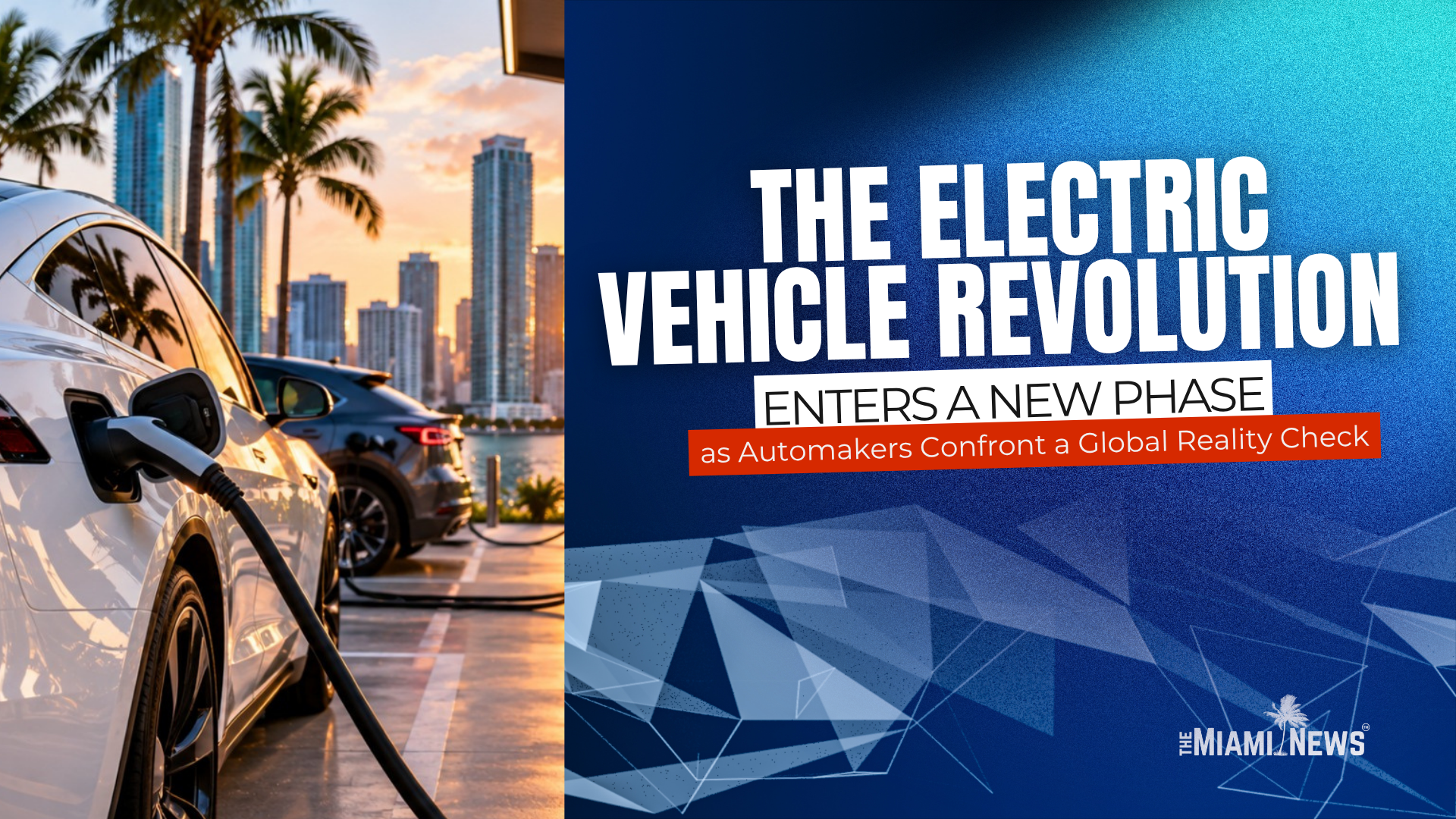
Electric cars have moved beyond a niche market, but the next stage of growth will depend on affordability, charging infrastructure and the ability of manufacturers to compete across very different economies.
The global automotive industry is undergoing one of the most significant transformations in its history. Electric vehicles, once regarded primarily as premium alternatives to conventional automobiles, have become a major force in international manufacturing and consumer markets. Yet the industry’s expansion is revealing an important distinction: widespread technological adoption does not mean that every country, company or consumer is moving at the same speed.
According to the International Energy Agency’s Global EV Outlook 2025, worldwide electric car sales exceeded 17 million in 2024, representing more than 20% of new car sales.
That milestone reflected a dramatic expansion of a market that had been considerably smaller just a few years earlier.
But the headline figure conceals substantial regional differences.
China reshapes the competitive landscape
China has emerged as the largest electric vehicle market.
The IEA reported that more than 11 million electric cars were sold in China in 2024, with electric models accounting for almost half of new car sales in the country.
This scale provides Chinese manufacturers with significant advantages in production experience, supply-chain development and access to a large domestic customer base.
The competitive consequences extend internationally.
Automakers in Europe, North America and other markets face pressure to improve battery performance, reduce manufacturing costs and introduce vehicles that appeal to price-sensitive customers.
For established manufacturers, the transition requires balancing investment in new electric platforms with continued demand for conventional vehicles.
For newer companies, it creates opportunities to challenge longstanding automotive brands.
Affordability becomes decisive
Early electric vehicle adoption was often associated with higher-income consumers who could absorb premium prices and install charging equipment at home.
Broader adoption depends on a different set of economic conditions.
Consumers must consider purchase prices, financing costs, insurance, maintenance, electricity rates and potential resale values.
Although electric vehicles can offer lower operating costs in some circumstances, those benefits vary considerably according to local electricity prices, driving patterns and available incentives.
A vehicle that makes financial sense for a homeowner with a private charger may be less practical for an apartment resident dependent on public charging.
The challenge is therefore not simply to manufacture more electric cars.
It is to make electric transportation convenient and financially accessible to a much wider population.
Charging infrastructure is an economic issue
Reliable charging networks are essential to consumer confidence.
Drivers need to know that charging stations are available, functional and compatible with their vehicles. They also need predictable pricing and reasonable charging times.
Public investment, private infrastructure development and electricity-grid planning all influence the success of the transition.
In dense cities, the challenge is particularly complex because many residents lack private parking spaces.
For Miami and other metropolitan areas, expanding charging access involves coordination among utilities, property owners, transportation agencies and local governments.
The availability of charging infrastructure can also affect tourism and commercial transportation, especially as rental companies and vehicle fleets evaluate electrification.
Environmental benefits require a broader perspective
Electric vehicles can reduce tailpipe emissions, but their total environmental impact depends on several factors.
Battery manufacturing requires energy and raw materials. Electricity generation varies widely among countries, and battery recycling remains an important industrial challenge.
A credible assessment must consider emissions across a vehicle’s life cycle rather than focusing exclusively on its operation.
The transition also raises questions about mineral supply chains, labor standards and the geographic concentration of battery production.
Governments seeking to strengthen domestic manufacturing must balance industrial policy, trade relationships and environmental objectives.
These considerations do not invalidate the potential benefits of electrification. They demonstrate that transforming transportation requires changes throughout the energy and manufacturing systems.
The road ahead
The IEA’s 2025 outlook projected that electric cars could account for more than 40% of global car sales by 2030 under the policies and market conditions assessed in that report.
That projection is not a guarantee. Economic conditions, government policy, technological progress and consumer preferences can all change the trajectory.
The automotive industry is entering a period in which technological capability must translate into dependable, affordable products.
The next chapter of the electric vehicle revolution will not be defined solely by record sales or ambitious corporate announcements.
It will be determined by whether electric transportation becomes practical for ordinary households across a broad range of markets.
Source: International Energy Agency, Global EV Outlook 2025.