
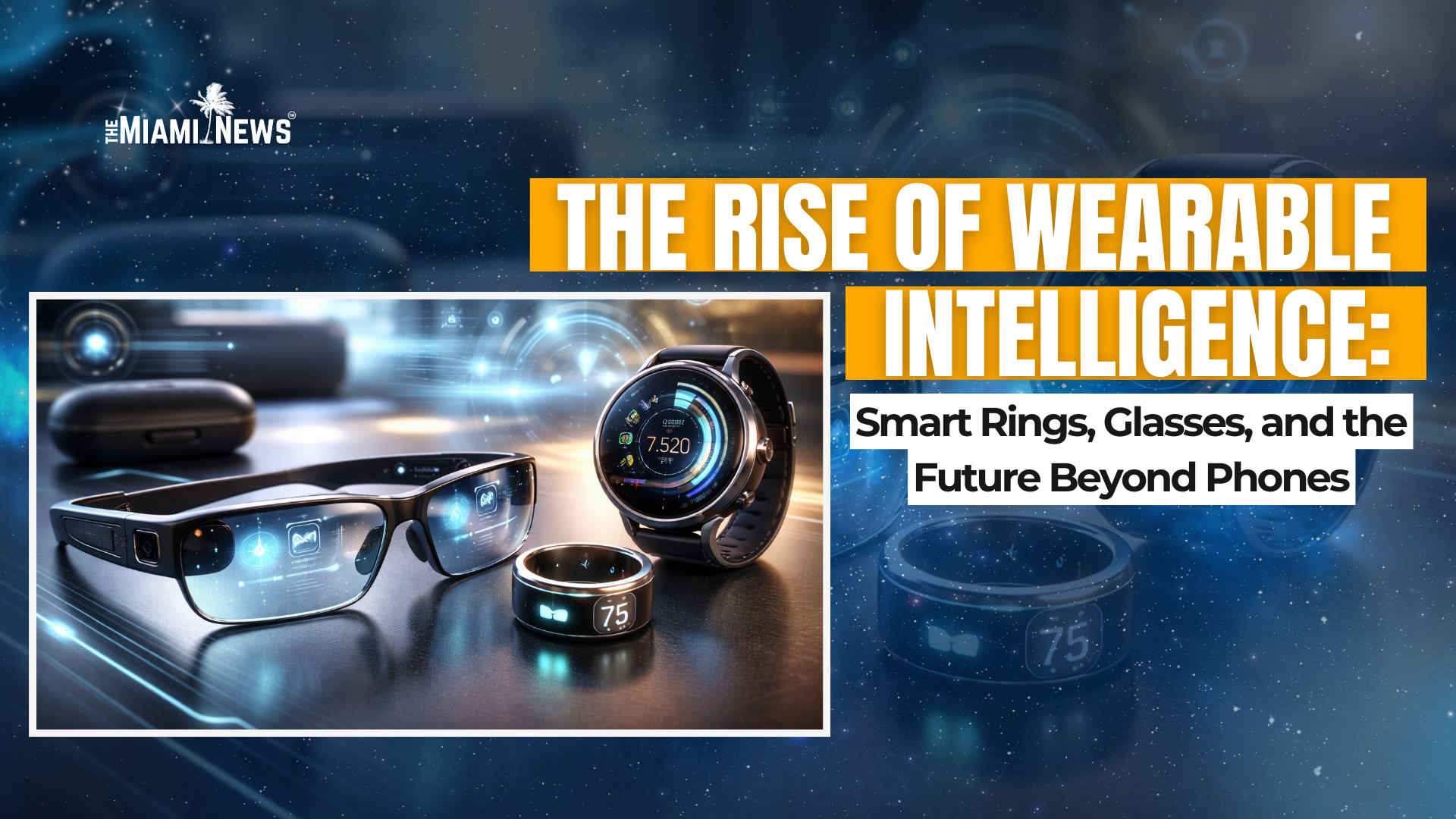
In 2026, the center of personal computing is shifting from screens to senses. Smart rings, AI glasses, and biometric patches are leading a quiet revolution in how people interact with technology, bypassing traditional smartphones altogether.
Wearable devices are no longer niche accessories. They are evolving into full scale platforms with AI driven capabilities that support health tracking, communication, productivity, and ambient interaction. According to IDC, global shipments of advanced wearables are expected to surpass 400 million units in 2026, up 35 percent from last year.
Leading the trend are smart rings that monitor sleep quality, stress levels, hydration, and fertility using discreet sensors. Oura, Samsung, and newly launched startup PulseLoop have all released rings with real time biometric feedback and app integration.
AI powered smart glasses are also gaining traction. Meta’s latest model and Apple’s VisionOS 2.0 both offer voice activated interfaces, real time translation, and contextual visual overlays for tasks like navigation and shopping. These devices are designed for continual use throughout the day, blending utility with social acceptability.
“People want technology that fits into their life, not the other way around,” said Yasmin Patel, design strategist at Form & Function Labs. “Wearables are finally delivering on that promise by making computing invisible and intuitive.”
One of the most significant developments is the integration of AI into wearables themselves. These devices can now process data locally, offer personalized suggestions, and learn from user routines without needing to sync constantly with a phone or server.
The implications are vast. Healthcare providers are testing smart wearables for continuous patient monitoring. Employers are piloting focus tracking tools. Athletes are training with adaptive gear that responds to muscle fatigue in real time.
Still, the growth of wearables raises questions around consent, data ownership, and social etiquette. Experts warn that as devices become more intimate and predictive, users must remain vigilant about how much access they grant and to whom.
In 2026, wearable tech is not just about convenience. It is about redefining human machine interaction, one gesture at a time.




Be First to Comment