
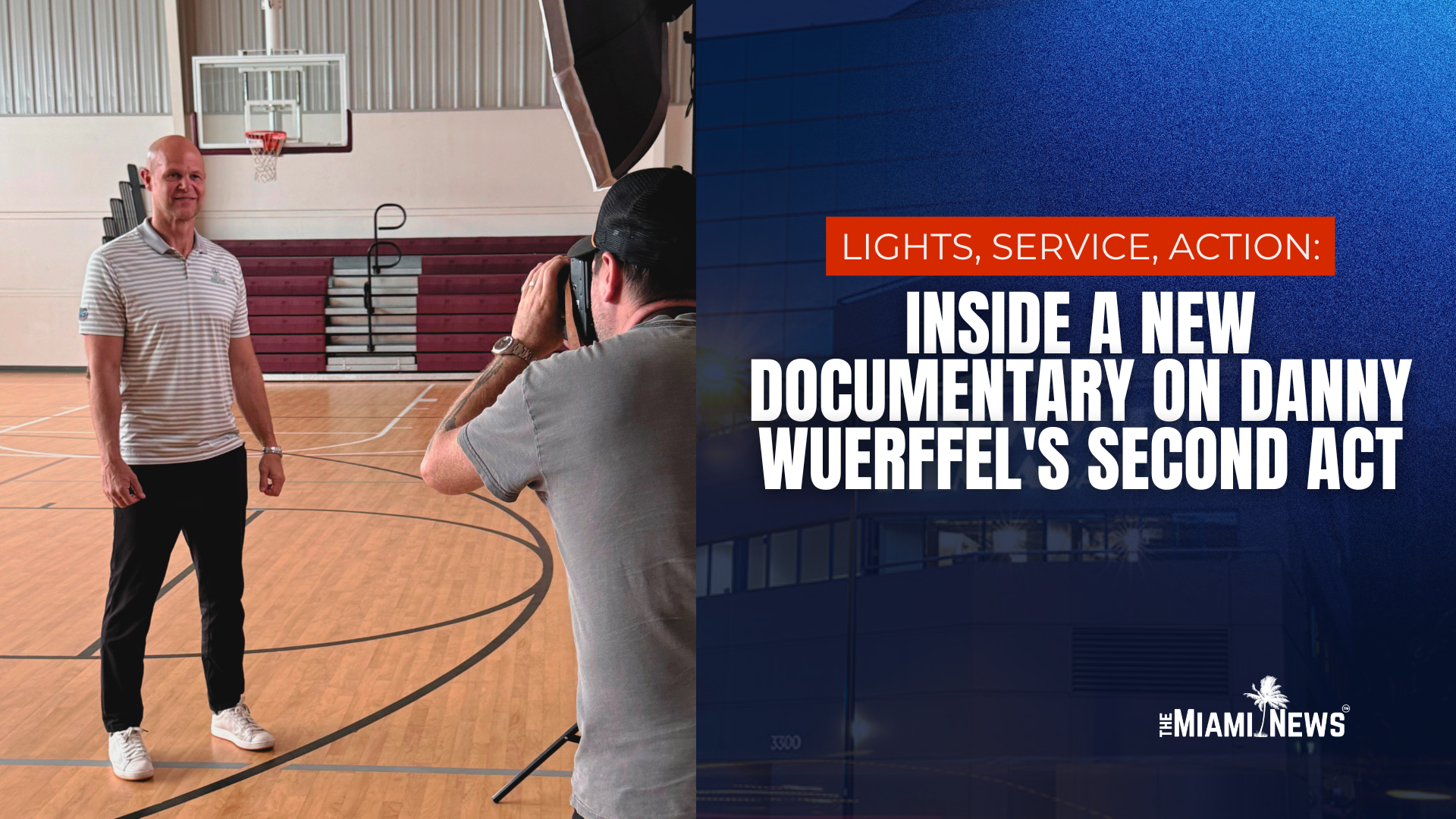
A behind-the-scenes look reveals how a former Heisman Trophy winner is redefining legacy through faith-driven community work in America’s most underserved neighborhoods.
On a humid morning outside a modest community center, cameras rolled. A film crew captured the quiet, determined rhythm of service. The subject: former Heisman Trophy-winning quarterback Danny Wuerffel. The location: a neighborhood shaped by resilience and recovery. The purpose: a new documentary chronicling Wuerffel’s transformation from football icon to nonprofit leader. In addition, it shows his mission to rebuild communities in the wake of hardship.
The scene unfolds not on a football field, but in front of the Thrive 9th Ward facility—a space that has become emblematic of renewal in areas long overlooked. Meanwhile, crew members adjust lighting rigs inside a gymnasium converted into a makeshift studio. Producers coordinate interviews and B-roll. Outside, Wuerffel greets community members with the familiarity of someone who has traded stadium cheers for something quieter. Yet, it is arguably more enduring.
“He’s not here for attention,” said one crew member between takes. “He’s here because this is where he believes he’s supposed to be.”
Wuerffel, who rose to national prominence during his college football career and later played in the NFL, returned to New Orleans after retiring from professional sports. His focus shifted to Desire Street Ministries, a nonprofit dedicated to revitalizing impoverished neighborhoods through spiritual guidance, education, and economic development. His connection to the organization dates back to his time with the New Orleans Saints in the late 1990s. Moreover, it is a relationship that deepened in the aftermath of Hurricane Katrina.
The documentary, currently in production, seeks to capture that evolution. Through interviews, archival footage, and on-the-ground storytelling, filmmakers aim to present a portrait not of athletic glory. Instead, they focus on sustained commitment.
“He had every reason to step away and live comfortably,” said a producer working on the project. “Instead, he stepped deeper into communities that needed leadership, stability, and hope.”
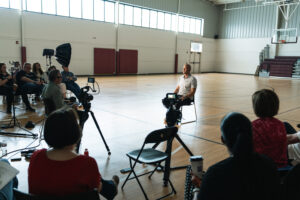
Images from the set show a collaborative effort: camera operators crouched beside tripods, assistants adjusting reflectors, and interview subjects preparing to share personal stories. In one frame, a woman smiles warmly, wearing a shirt emblazoned with a simple message—“Virgin”—as she holds a phone, waiting for her cue. In another, a crew member checks footage on a tablet while discussing framing with a colleague. The atmosphere is industrious yet intimate. This reflects the tone the filmmakers hope to achieve.

Inside the gymnasium, rows of folding chairs face a small interview setup. The space, typically used for recreation, has been temporarily transformed into a storytelling hub. Lighting stands cast a soft glow, while cables snake across the polished floor. It is here that voices—both prominent and unheard—are being recorded.
“This isn’t just about Danny,” said a local organizer featured in the film. “It’s about the people who stayed, who rebuilt, who believed things could change.”
Under Wuerffel’s leadership, Desire Street Ministries expanded beyond New Orleans, relocating its headquarters to Atlanta and launching programs across several Southern cities. According to internal reports, the organization has supported dozens of community leaders and initiatives focused on education, housing, and youth development. The documentary highlights these efforts, placing them within a broader narrative of systemic inequality and grassroots resilience.

Experts say such initiatives are increasingly vital. For example, a 2023 report from the Urban Institute found that community-based organizations play a critical role in addressing poverty, particularly in areas where institutional support is limited. By investing in local leadership, these groups can create sustainable change from within.
“Top-down solutions often miss the nuances of individual communities,” said one policy analyst. “What Wuerffel and his team are doing is empowering people who already understand those nuances.”
The film does not shy away from challenges. Interviews touch on funding constraints, volunteer burnout, and the lingering effects of disasters like Katrina. Yet, there is an undercurrent of optimism—a belief that progress, while incremental, is possible.
One particularly striking moment captured during filming shows Wuerffel embracing a longtime community partner at the entrance of the center. The gesture is simple, but it encapsulates the film’s central theme: connection.
“He remembers names, stories, struggles,” said another crew member. “That’s rare.”
As production continues, the documentary promises to offer more than a retrospective on a celebrated athlete. It is, instead, a forward-looking exploration of purpose—how influence can be redirected, and how legacy can be redefined not by accolades, but by impact. In a world often captivated by fame, Danny Wuerffel’s story suggests a different kind of victory: one measured in lives changed, communities strengthened, and hope restored.
Sidebar:
- Danny Wuerffel: Heisman Trophy winner and former NFL quarterback
- Desire Street Ministries: Nonprofit focused on urban community development
- Post-Katrina Role: Became executive director during recovery efforts
- Expansion: Programs now active in multiple Southern U.S. cities
- Documentary Focus: Faith, service, and sustainable community transformation






Be First to Comment