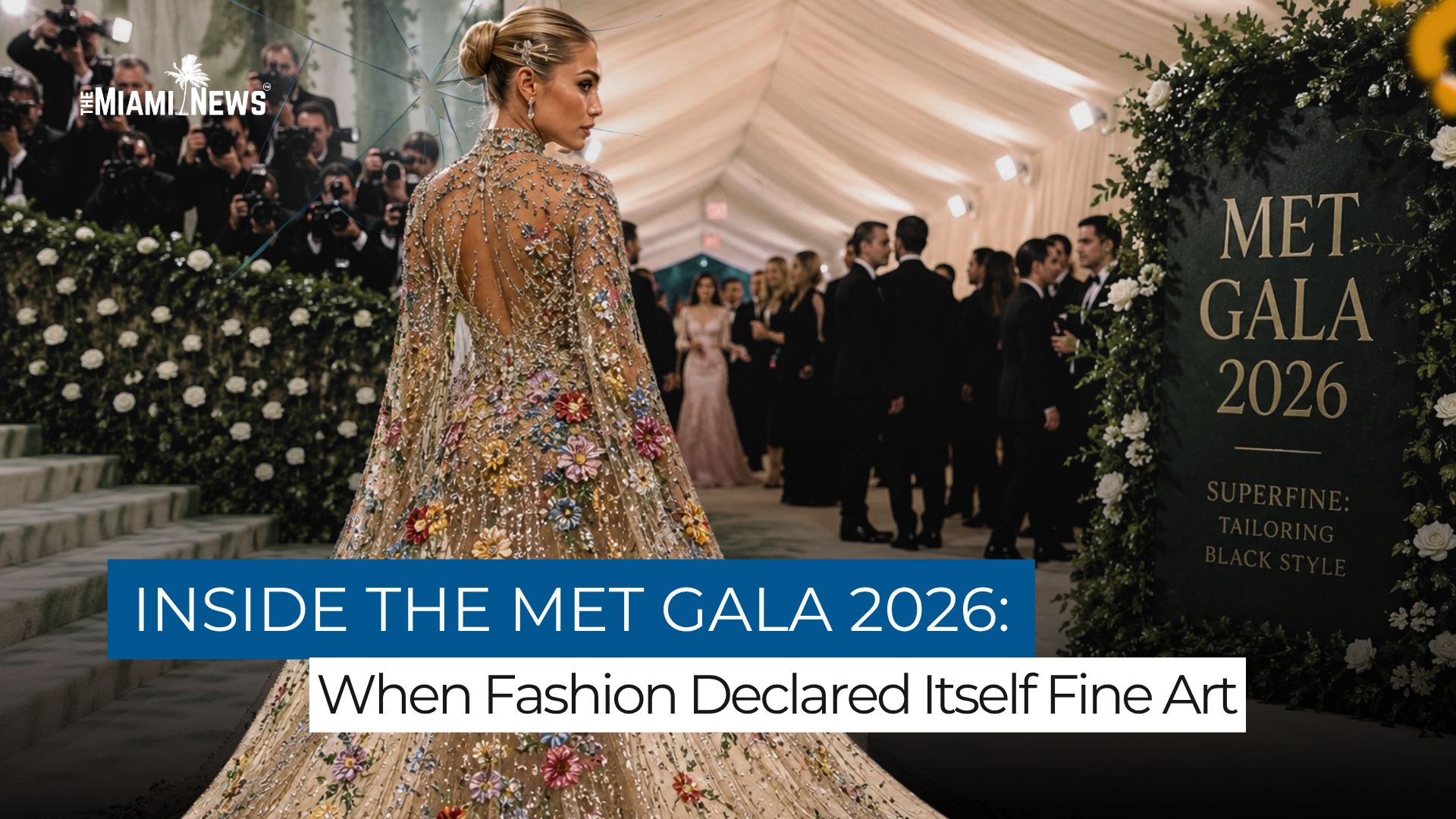
With Beyoncé, Nicole Kidman, and Venus Williams co-chairing the event, this year’s Met Gala blurred the boundaries between museums, celebrity culture, and living performance art.
NEW YORK — By the time the final guests climbed the grand staircase of the Metropolitan Museum of Art on Monday evening, the 2026 Met Gala had already become less a red carpet than a curated exhibition of living sculptures. Under the theme “Costume Art” and the dress code “Fashion Is Art,” celebrities arrived dressed not simply as stars, but as moving canvases.
The annual fundraiser, overseen once again by Anna Wintour, took place on May 4 and reportedly raised a record-breaking sum for the Costume Institute. Co-chairs Beyoncé, Nicole Kidman, and Venus Williams joined Wintour in hosting an evening that emphasized fashion’s relationship with painting, architecture, surrealism, and performance.
The atmosphere inside the museum reflected a growing shift in how luxury fashion presents itself to the world. Instead of relying solely on glamour, designers leaned heavily into conceptual storytelling. Some guests arrived in gowns inspired by Picasso and Dalí, while others referenced Renaissance portraiture, abstract sculpture, and anatomical illustration.
One of the evening’s most discussed appearances came from Beyoncé, whose skeletal-inspired couture ensemble sparked immediate debate across social media. Colman Domingo drew praise for a Picasso-inspired Valentino look, while actress Sarah Paulson used fashion politically, wearing a mask decorated with symbolic dollar imagery.
“This year felt less commercial and more intellectual,” fashion historian Elise Monroe told The Miami News. “The Met Gala has always balanced spectacle with scholarship, but 2026 pushed much harder toward museum-grade artistic interpretation.”
The event also reflected larger changes inside the fashion industry itself. Luxury brands increasingly compete for cultural authority in a crowded digital landscape where viral visibility matters as much as craftsmanship. The Met Gala now functions not just as a fundraiser but as a global branding event capable of generating billions of online impressions within hours.
Behind the scenes, the museum’s newly expanded Condé Nast galleries allowed curators to stage one of the Costume Institute’s largest exhibitions in years. The accompanying show pairs iconic garments with artworks from across the museum’s permanent collection, reinforcing the gala’s central argument: fashion belongs beside fine art.
For decades, critics dismissed fashion as disposable glamour. But on the steps of the Met in 2026, amid sculptural gowns, surreal tailoring, and museum lighting, the message was unmistakable. Fashion no longer seeks validation from the art world. It believes it already belongs there.









Be First to Comment