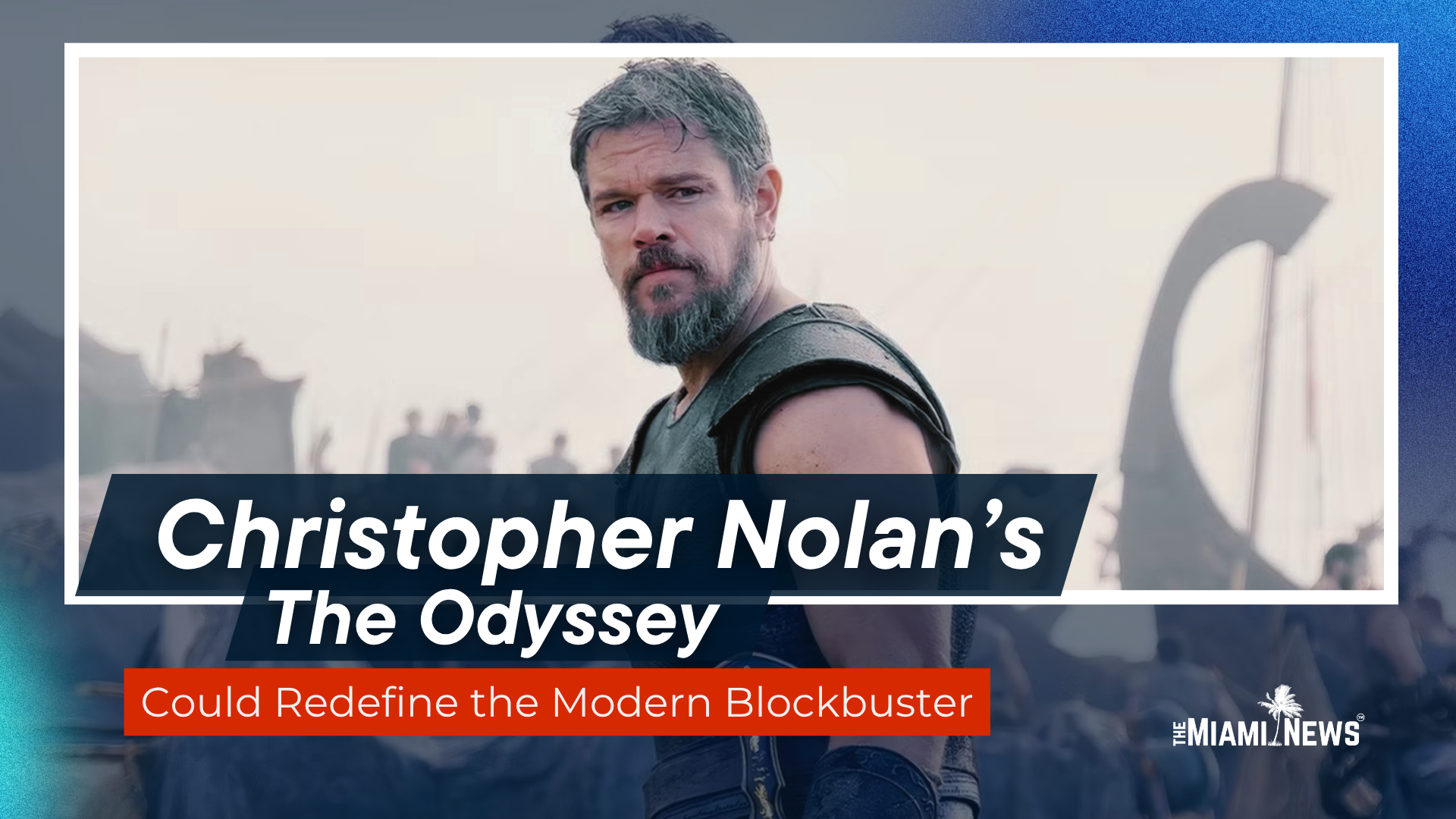
The Oscar-winning filmmaker is trading superheroes and science fiction for one of history’s greatest epics, betting that audiences are ready for ambitious storytelling on an unprecedented scale.
Christopher Nolan has built a career on challenging audiences with films that blend spectacle and intellectual ambition. With The Odyssey, the Academy Award-winning director is taking perhaps his biggest creative gamble yet, adapting Homer’s nearly 3,000-year-old epic into what is expected to be one of the largest and most expensive original films ever produced.
The Universal Pictures production brings together an all-star ensemble and is being filmed across multiple international locations using cutting-edge IMAX technology. The project continues Nolan’s long-standing commitment to theatrical filmmaking following the global success of Oppenheimer, which grossed nearly $1 billion worldwide and won seven Academy Awards.
Unlike Hollywood’s steady stream of sequels and cinematic universes, The Odyssey is based on one of Western literature’s foundational works. The story follows Odysseus’ decade-long journey home after the Trojan War, confronting mythical creatures, gods, and impossible choices along the way. The narrative has inspired countless adaptations over centuries, but Nolan’s version aims to deliver the tale as a large-scale cinematic event for modern audiences.
Industry analysts view the project as a significant test for the theatrical marketplace. Studios have increasingly relied on established franchises to reduce financial risk, while original tentpole productions have become relatively rare. Nolan remains one of the few directors capable of securing blockbuster-level budgets for non-franchise storytelling because of his consistent commercial success and global reputation.
Universal executives are expected to position The Odyssey as a premium theatrical experience, capitalizing on the growing demand for IMAX and large-format screenings. A strong commercial performance could encourage studios to invest more aggressively in original large-scale productions, offering a counterbalance to an industry increasingly dominated by sequels, remakes, and comic book adaptations.
For Hollywood, The Odyssey is more than another blockbuster. It is a referendum on whether original storytelling can still command global audiences in the franchise era.