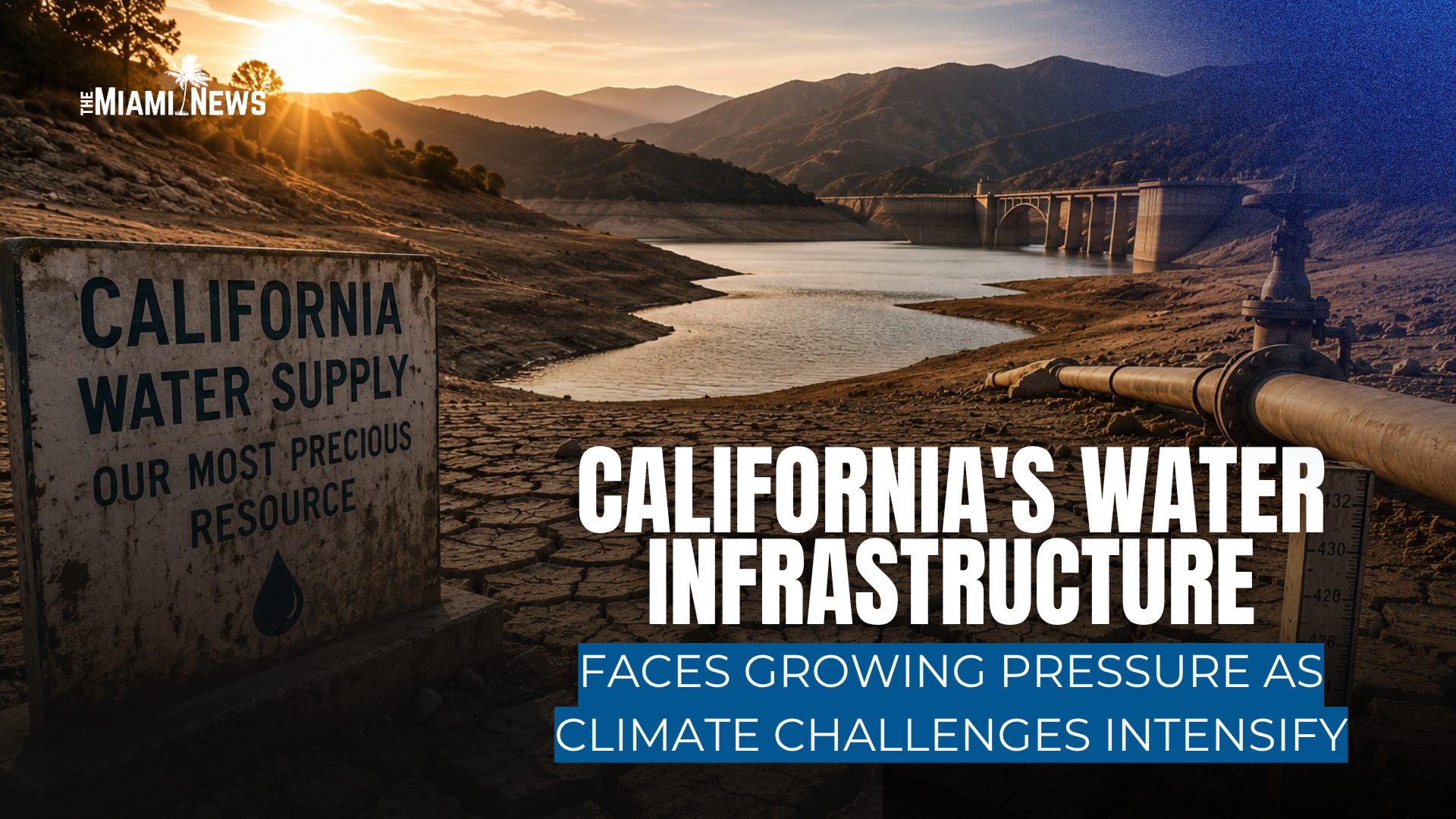
Rising temperatures, prolonged droughts, and aging infrastructure are forcing California to rethink how it manages one of its most valuable natural resources while investing billions in long-term water security.
California’s water system is facing one of its greatest tests as climate change continues to reshape weather patterns across the western United States. State officials, water agencies, and environmental experts are working to modernize aging infrastructure while preparing for increasingly unpredictable cycles of drought and heavy rainfall. The challenge is no longer simply storing enough water during dry years but creating a system capable of adapting to extreme weather conditions that are becoming more common.
Over the past decade, California has experienced prolonged droughts followed by powerful winter storms that delivered record-breaking rainfall in some regions. While heavy precipitation has temporarily replenished reservoirs, experts warn that the state’s long-term water security remains uncertain. Much of California’s infrastructure was designed decades ago under climate conditions that no longer reflect today’s reality.
Many reservoirs, canals, levees, and aqueducts require significant upgrades to handle shifting weather patterns. Water managers are investing in projects that improve storage capacity, strengthen flood protection, and expand groundwater recharge systems. These efforts are intended to capture excess stormwater during wet seasons and store it underground for use during future droughts.
Agriculture remains one of California’s largest water users, supplying fruits, vegetables, and nuts to markets across the United States and around the world. Farmers have increasingly adopted drip irrigation, precision agriculture, and advanced monitoring technologies to improve water efficiency. While these innovations have reduced consumption in many areas, ongoing water shortages continue to place pressure on agricultural production and rural communities.
Urban areas are also adapting to changing conditions. Cities across California have expanded water recycling programs, encouraged conservation through incentive programs, and invested in modern infrastructure that reduces leaks and improves distribution. Residents have responded by replacing lawns with drought-resistant landscaping and installing water-efficient appliances as conservation becomes part of everyday life.
Environmental organizations stress that protecting rivers, wetlands, and wildlife habitats must remain a central part of California’s water strategy. Reduced river flows and declining groundwater levels have affected fish populations, migratory birds, and ecosystems that depend on reliable water supplies. Balancing environmental protection with the needs of growing communities and agricultural producers continues to be one of the state’s most complex policy challenges.
Climate scientists warn that warmer temperatures will likely reduce mountain snowpack, which has historically served as California’s largest natural reservoir. As more winter precipitation falls as rain instead of snow, water flows into rivers earlier in the year, making it more difficult to store enough supplies for the dry summer months. This shift is prompting officials to redesign water management strategies for a changing climate.
Technology is playing an increasingly important role in addressing these challenges. Artificial intelligence, satellite monitoring, and advanced forecasting models are helping water agencies better predict demand, monitor infrastructure, and respond more quickly to changing weather conditions. Smart sensors installed throughout water systems provide real-time data that supports more efficient decision-making and reduces waste.
State and federal governments continue investing billions of dollars in infrastructure improvements designed to strengthen long-term water resilience. Projects include expanding reservoirs, repairing aging canals, reinforcing levees, modernizing treatment facilities, and developing additional recycled water supplies. While these investments require significant funding, officials argue they are essential to protecting communities, businesses, and agriculture from future water shortages.
Experts agree that no single solution will solve California’s water challenges. Instead, success will depend on combining infrastructure modernization, conservation, technological innovation, and responsible environmental stewardship. Cooperation among government agencies, private industry, researchers, and local communities will be critical as climate conditions continue to evolve.
California has long been recognized for its ability to adapt to changing circumstances through innovation and long-term planning. As climate pressures intensify, the state’s approach to water management may serve as a model for other regions around the world facing similar challenges. The decisions made today will shape not only California’s future but also the resilience of communities that increasingly depend on sustainable water resources.