
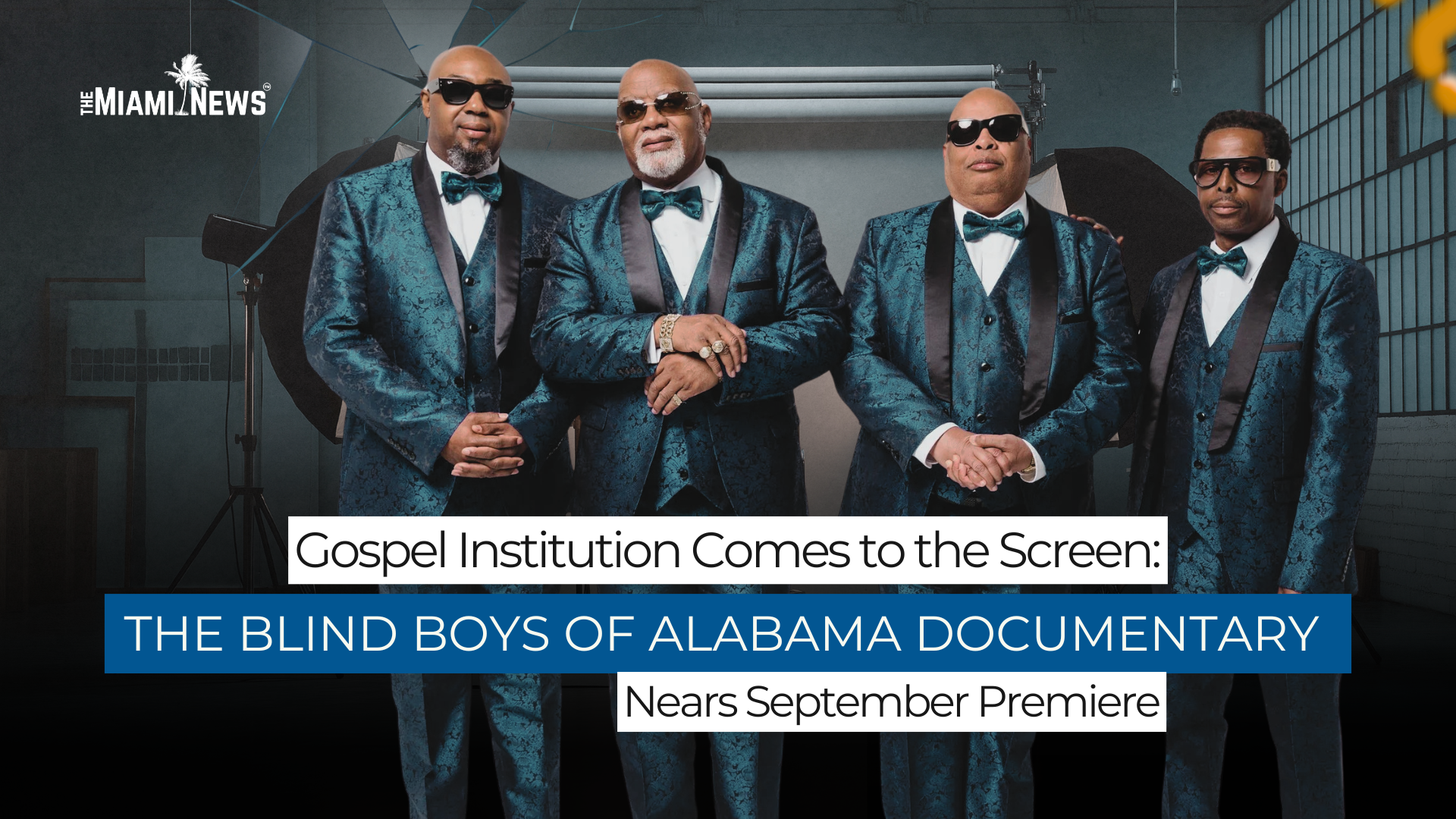
As principal photography wraps, 24-time Emmy-winning director Nick Nanton turns his lens on eight decades of American music, civil rights history, and spiritual resilience. He traces the enduring power of The Blind Boys of Alabama.
A new documentary chronicling the extraordinary 80-year journey of The Blind Boys of Alabama has wrapped principal photography ahead of a September executive producer premiere. Directed by Nick Nanton and produced by Astonish Entertainment in association with Abundance Studios, the film offers an expansive portrait of one of America’s longest-running and most influential musical groups. This gospel institution’s sound helped shape rock ’n’ roll. Furthermore, their message bridged racial divides across generations.
A Story That Mirrors American History
Formed in 1939 at the Alabama Institute for the Negro Deaf and Blind, the group began as teenagers singing on the segregated gospel circuit of the Jim Crow South. Over time, their harmonies would echo far beyond Southern churches. They resonated through the Civil Rights Movement, across international stages, and into the broader canon of American popular music.
“The Blind Boys of Alabama set the tone and rhythm of life, bridging the gap between generations and bringing people of all races, colors and creeds together,” said director Nanton in a statement. “Through their story, the film reflects on pivotal eras, from the Civil Rights Movement to decades of social change, and the enduring power of faith and music as forces for unity.”
The documentary traces how the ensemble’s “hard gospel” style prefigured the emotional intensity that would later define soul and rock music. Long before arena tours and Grammy stages, their fervent vocal arrangements influenced artists such as Bob Dylan and Little Richard. In addition, they laid groundwork for performers including James Brown. Their arrangements would inspire songs later popularized by The Rolling Stones and Ben E. King. As a result, this positioned the Blind Boys not merely as gospel traditionalists but as architects of modern popular music.
An Enduring Legacy, Still in Motion
Across eight decades, the group has earned six Grammy Awards, a Grammy Lifetime Achievement Award, induction into the Gospel Music Hall of Fame, and a National Endowment for the Arts Fellowship. They remain the longest-running music group in American history.
Their 2024 album Echoes of the South earned three Grammy nominations and won Best Roots Gospel Album, a reminder that their creative vitality remains undiminished. Following a high-profile collaboration with blues legend Buddy Guy on “Jesus Loves the Sinner,” featured on his Grammy-winning album Ain’t Done with the Blues, the Blind Boys continue to expand their audience across genres and generations.
Over the years, they have collaborated with artists spanning musical borders, from Peter Gabriel and Bonnie Raitt to Tom Petty, Willie Nelson, Mavis Staples, and Justin Vernon. Their reinterpretation of secular songs through a gospel lens, including a stirring rendition of “Amazing Grace” set to the melody of “House of the Rising Sun,” and Stevie Wonder’s “Higher Ground,” exemplifies a rare balance between spiritual fidelity and genre-defying experimentation.
Perhaps most emblematic of their crossover resonance was their version of Way Down in the Hole, originally by Tom Waits, which became the iconic theme for Season 1 of The Wire.
The Human Story Behind the Harmony
At its heart, the documentary is less about awards than about resilience. Many members were born blind, others lost their sight later in life. The film captures their lived experience with intimacy, with rehearsals, backstage conversations, and reflections on faith. These are interwoven with archival footage spanning from the segregated South to global concert halls in Europe, Australia, Brazil, Morocco, and Japan.
The only living original member, Jimmy Carter, appears alongside current frontmen Ricky McKinnie and Joey Williams. These members offer first-person testimony that bridges nearly a century of American transformation. Interviews also feature musicians including Peter Gabriel, Susan Tedeschi, Derek Trucks, Timothy B. Schmit, and Justin Vernon.
“This music has always been bigger than us, it’s about faith, perseverance, and hope,” the group said collectively in a statement. “Nick and his team created a space where our voices, our history, and our purpose could be honored honestly.”
The film positions the Blind Boys not merely as performers, but as cultural bridge-builders. In one notable international moment, the late civil rights leader Jesse Jackson joined them on stage in Rio de Janeiro. This is a scene emblematic of the group’s ability to connect American civil rights history with global audiences.
A September Spotlight
Production began in spring 2025, with additional details about festival premieres and distribution expected in the coming months. The executive producer premiere slated for September is already generating early industry interest. This comes particularly as music documentaries continue to perform strongly in both festival circuits and streaming platforms.
In an era when the music industry often chases reinvention, the Blind Boys of Alabama represent something rarer, continuity. Their story, rooted in faith, shaped by segregation, elevated by artistic collaboration, reflects the broader arc of American culture itself.
As Nanton described it, the film is “a living portrait of American history told through song.”
And in a fractured cultural moment, the Blind Boys’ harmonies may resonate louder than ever.
Sidebar: The Blind Boys of Alabama at a Glance
- Founded: 1939, Alabama Institute for the Negro Deaf and Blind
- Career Span: 80+ years
- Awards: 6 Grammy Awards + Grammy Lifetime Achievement Award
- Notable Collaborators: Peter Gabriel, Bonnie Raitt, Tom Petty, Willie Nelson, Mavis Staples
- Signature Crossover Moment: “Way Down in the Hole” as the theme of HBO’s The Wire





Be First to Comment