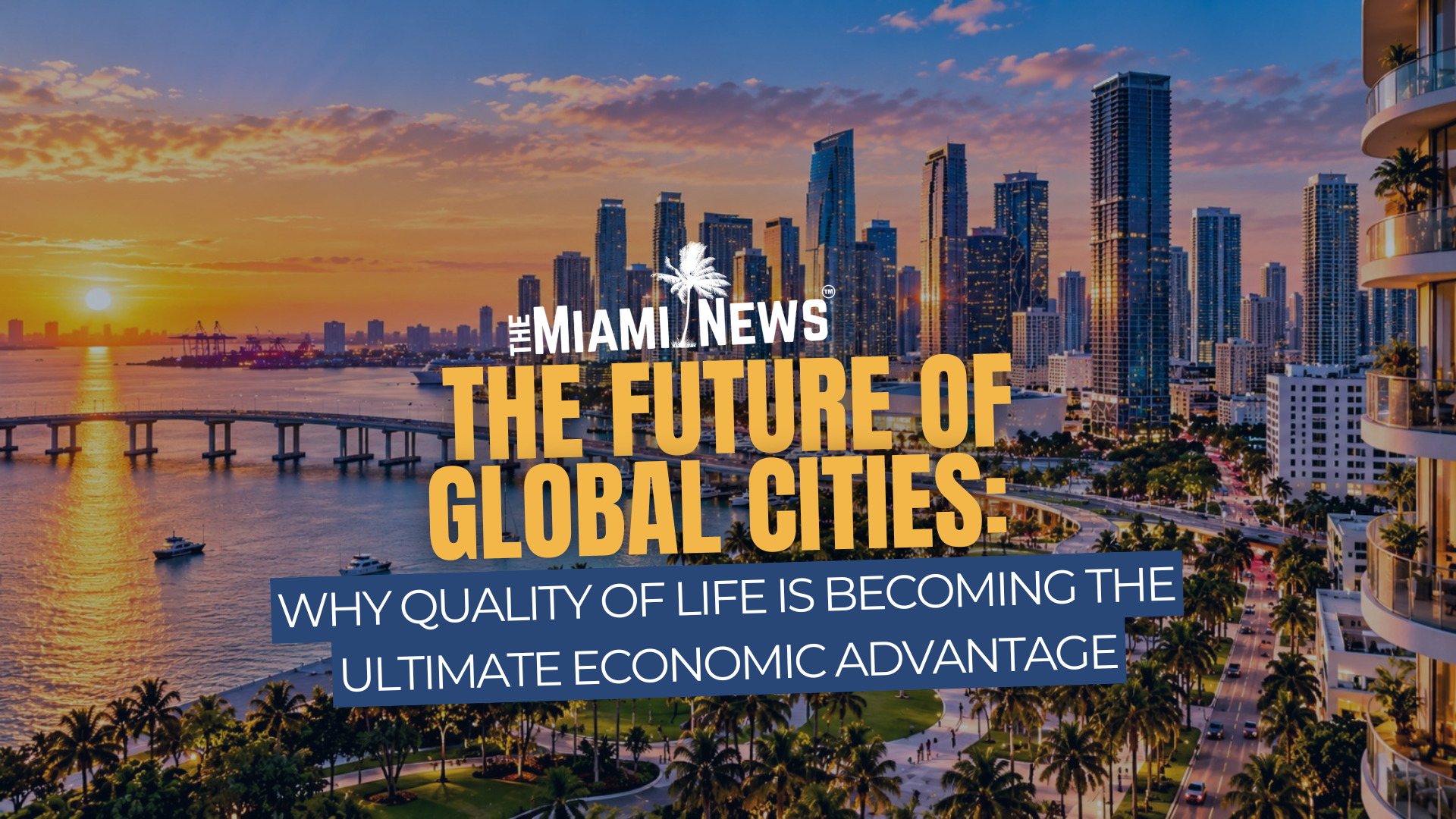
From Miami to Singapore, cities are competing for talent, investment and innovation. But their long-term success may depend on something more fundamental than impressive skylines: whether ordinary people can afford to live and thrive in them.
Across the world, cities are undergoing a profound transformation. New residential towers, expanding transportation networks and ambitious commercial developments are changing urban landscapes, while remote work, demographic shifts and rising housing costs challenge traditional assumptions about where people choose to live. For city leaders and investors, the central question is no longer simply how to attract growth, but how to ensure that growth produces communities capable of sustaining it.
The scale of urban development makes the question particularly urgent.
The United Nations’ World Urbanization Prospects 2025 reports that cities, under its updated settlement classifications, are home to approximately 45% of the world’s population of 8.2 billion.
As urban populations evolve, competition among metropolitan regions increasingly involves housing affordability, transportation efficiency, public safety, environmental resilience and access to economic opportunity.
The changing meaning of a successful city
For much of the modern era, urban success was frequently measured through population growth, commercial construction and the arrival of major employers.
Those indicators remain important, but they reveal only part of the picture.
A city can attract substantial investment while becoming increasingly difficult for essential workers, young professionals and families to afford.
High housing costs can force employees to live farther from their workplaces, increasing commuting times and placing pressure on transportation infrastructure.
Businesses may eventually face recruitment difficulties when workers cannot find suitable accommodation near employment centers.
The resulting tension is not merely a social concern. It can become a structural economic weakness.
A city that attracts capital but struggles to retain teachers, healthcare workers, service employees and emerging entrepreneurs risks undermining the foundations of its own growth.
Miami and the challenge of rapid transformation
Miami provides an important case study in the opportunities and pressures associated with international urban development.
Its global connections, coastal location and appeal to investors have contributed to its reputation as a destination for business, tourism and luxury real estate.
The city also faces challenges familiar to other desirable metropolitan areas: housing affordability, transportation needs, infrastructure demands and exposure to climate-related risks.
For developers, demand for premium property can create attractive investment opportunities.
For policymakers, the challenge is ensuring that economic development benefits a wider range of residents.
An urban economy cannot function entirely through luxury residential projects and high-end commercial services. It requires a diverse workforce and housing options appropriate to different income levels.
Addressing that imbalance demands cooperation among government, employers, property developers and community organizations.
Lessons from international cities
Different metropolitan regions offer distinct approaches to urban development.
Singapore is frequently examined for its long-term planning and extensive public housing system, although its institutional and geographic circumstances differ substantially from those of most American cities.
Copenhagen has emphasized cycling infrastructure and public-space design, demonstrating how transportation choices can influence daily urban life.
Tokyo illustrates the importance of extensive rail networks and the relationship between land-use policy and metropolitan mobility.
No single model can be transferred directly from one city to another.
Local government structures, financing systems, population density and cultural expectations all shape what is possible.
Nevertheless, these examples reinforce a common principle: infrastructure and housing policy are central components of economic competitiveness.
Climate resilience enters the real estate equation
Environmental conditions are becoming increasingly important to urban planning.
Coastal cities must consider flooding, storm exposure and the long-term costs of protecting infrastructure. Other metropolitan areas face extreme heat, water scarcity or different forms of environmental stress.
These risks influence insurance availability, construction costs, municipal budgets and the financial assumptions behind property investment.
For developers, resilience may increasingly affect the attractiveness of individual projects.
For residents, the consequences can be more immediate.
Rising insurance expenses, infrastructure disruptions and climate-related damage can compound existing affordability pressures.
Cities that invest in resilient infrastructure and transparent risk assessment may be better positioned to maintain economic stability over time.
However, such investments also raise difficult questions about who pays and which neighborhoods receive protection first.
The importance of public space and community
Urban quality of life extends beyond housing and transportation.
Parks, libraries, cultural institutions, accessible waterfronts and neighborhood gathering places contribute to the everyday experience of city residents.
These spaces can strengthen social connections and make dense urban environments more livable.
They also support the cultural identity that distinguishes one city from another.
A metropolitan region composed exclusively of expensive buildings and commercial developments may attract attention without creating a strong sense of belonging.
For international cities, preserving local character while accommodating growth is a continuing challenge.
What the next generation of cities must deliver
The cities that thrive in the coming decades will need to reconcile competing priorities.
They must attract investment without making housing inaccessible, encourage innovation without neglecting essential services and build modern infrastructure while preparing for environmental uncertainty.
Success will require more than ambitious architectural projects or promotional campaigns designed to attract wealthy residents.
It will depend on the everyday realities of the people who live and work there.
The future of global cities will ultimately be judged not only by how high their buildings rise, but by how effectively they create opportunity, stability and a meaningful quality of life for the communities beneath them.
Source: United Nations Department of Economic and Social Affairs, World Urbanization Prospects 2025.