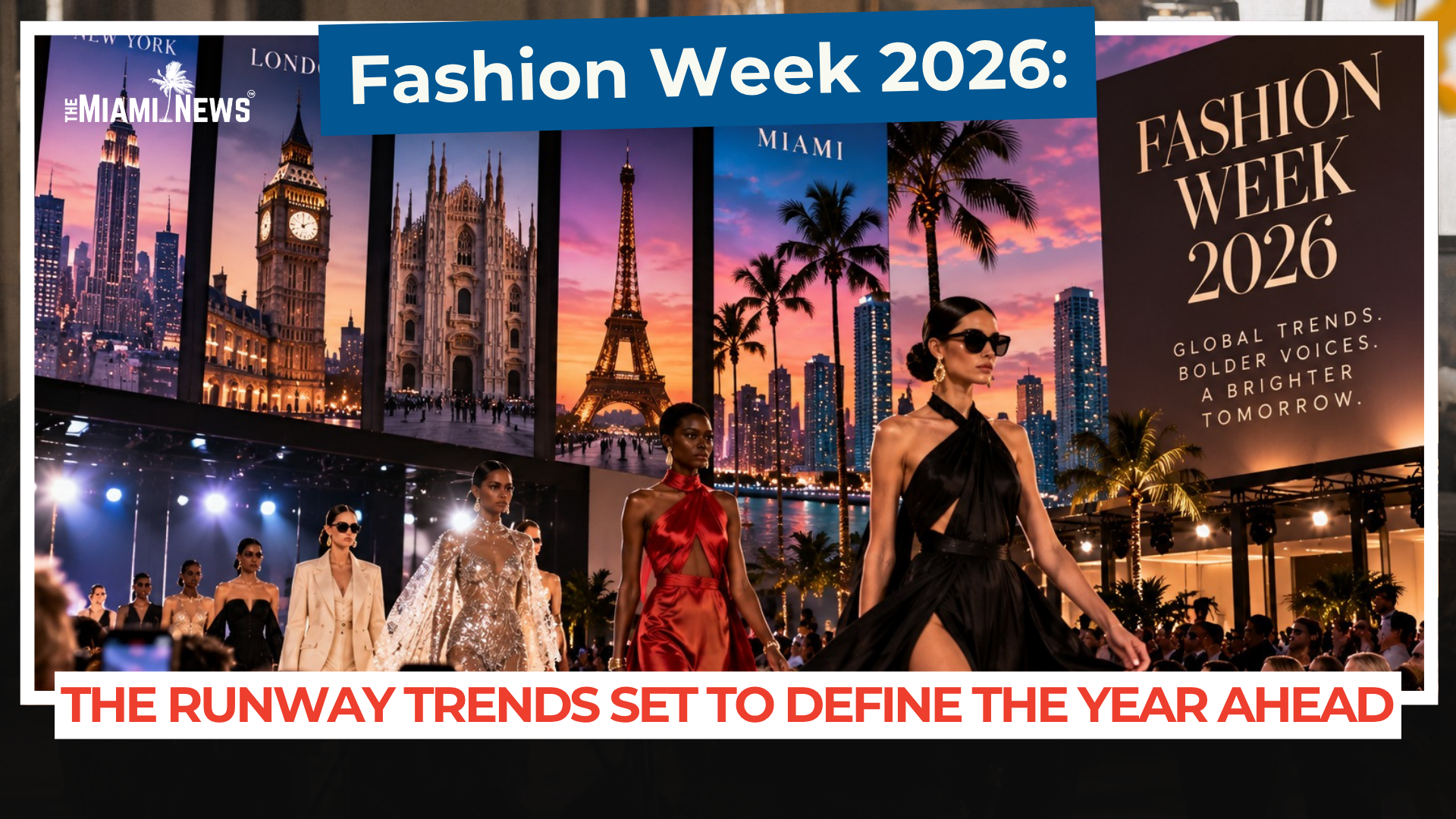
From Parisian luxury houses to emerging designers in New York, Fashion Week 2026 is becoming a window into something larger than clothing. Technology, celebrity culture, changing luxury spending and a renewed appetite for individuality are reshaping the global fashion business.
PARIS — Fashion Week has always sold more than clothes. It sells aspiration, identity and the possibility that a collection presented for a few minutes on a runway can eventually influence what millions of people wear.
In 2026, however, the runway is competing with an entirely different fashion ecosystem.
New York, London, Milan and Paris remain the industry’s most influential fashion capitals, but the collections presented there now travel around the world almost instantly. A silhouette can leave a runway and appear across TikTok, Instagram and digital fashion publications before many guests have left the venue.
That acceleration is changing who determines what becomes fashionable.
Editors and buyers remain influential, but celebrities, creators and consumers now participate in the trend-making process in real time. A runway look worn by the right musician, actor or online personality can achieve more global exposure than an expensive traditional advertising campaign.
The result has transformed the front row into an extension of the runway itself.
Fashion houses increasingly design shows as cultural events capable of generating millions of photographs, videos and social interactions. Celebrity arrivals, elaborate sets and unusual locations have become part of the communication strategy surrounding a collection.
The Business Behind Fashion Week 2026
Yet beneath the spectacle lies a more serious economic question.
Luxury consumers have become more selective, forcing brands to justify increasingly high prices while competing for attention across a crowded marketplace. The challenge is especially acute for large fashion houses balancing commercial products — handbags, footwear, fragrances and accessories — against the creative experimentation expected from a runway collection.
Emerging designers face a different problem. Fashion Week can deliver global attention, but producing collections and runway presentations is expensive. Independent labels must translate critical enthusiasm into sales quickly enough to survive.
Technology is adding another layer of disruption.
Artificial intelligence is beginning to influence forecasting, merchandising, marketing and aspects of the creative process. Digital tools allow brands to analyze consumer behavior with extraordinary speed, while designers can experiment with new approaches to visualization and production.
The technology also raises an uncomfortable question for an industry built around authorship: where does inspiration end and automated imitation begin?
Fashion has historically thrived on references, reinterpretation and reinvention. Generative technology makes those boundaries considerably harder to define.
Sustainability remains another unresolved tension.
Consumers increasingly expect brands to discuss materials, sourcing, labor and environmental responsibility. At the same time, the social-media economy encourages an almost continuous cycle of new aesthetics and micro-trends.
Fashion Week sits directly at the center of that contradiction. The industry celebrates craftsmanship and longevity while simultaneously depending on the excitement generated by something new.
What Fashion Week 2026 Means for Miami
For Miami, these global changes have particular relevance.
The city’s fashion identity operates differently from those of Paris or Milan. Miami sits at the intersection of luxury, Latin American and Caribbean influences, resort wear, nightlife, swimwear and an increasingly international creative economy.
Runway trends that appear impractical in other American markets can find natural expression in South Florida, where color, lightweight tailoring and statement dressing already form part of the visual language.
Miami’s luxury retail sector also connects the city directly to the fortunes of international fashion houses. What happens in Paris and Milan ultimately reaches boutiques and shopping districts thousands of miles away.
But Miami has an opportunity to do more than consume trends created elsewhere.
Its international population, year-round tourism, creative industries and proximity to Latin America position the city to become a stronger bridge between established fashion capitals and designers from emerging markets.
That may be one of the most interesting lessons of Fashion Week 2026.
Fashion’s traditional capitals remain powerful, but cultural influence is becoming more geographically dispersed. A designer can emerge far from Paris, build an international audience digitally and reach consumers without waiting for the industry’s traditional gatekeepers to grant permission.
The runway is not disappearing. If anything, its theatrical power has become more valuable in an overwhelmingly digital world.
What is changing is what happens after the models leave it.
Fashion Week once told consumers what they would wear next. Today, it begins a global conversation in which designers, celebrities, algorithms, creators and consumers all have a voice.
For an industry built on predicting the future, that redistribution of influence may be the biggest trend of all.