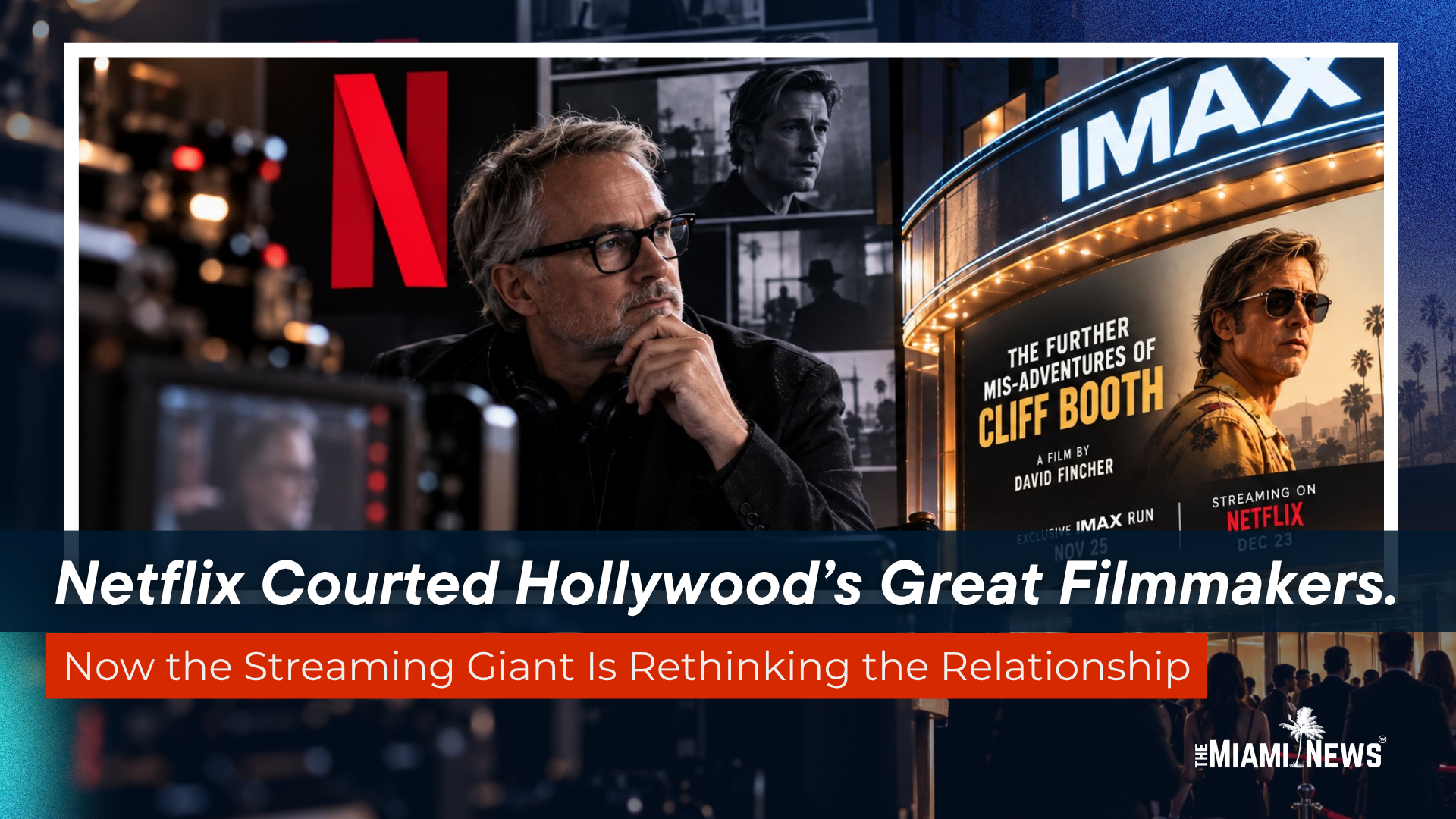
David Fincher has opted not to renew his exclusive Netflix production deal, part of a broader shift that could reshape how streaming services value prestige cinema.
LOS ANGELES — For much of the streaming era, Netflix pursued legitimacy in Hollywood with an unmistakable strategy: hire important filmmakers, give them considerable resources and convince audiences that a movie premiering at home could carry the cultural weight of one opening in theaters.
David Fincher became one of the clearest symbols of that experiment.
The director behind Fight Club, Zodiac and The Social Network signed an exclusive Netflix agreement in 2020 and went on to make films including Mank and The Killer for the service. But as Hollywood enters another phase of consolidation and streaming economics, that relationship is changing.
Fincher has opted not to renew his Netflix production agreement when it expires, according to reporting published in late September. His departure has fueled industry debate over whether Netflix is moving away from the prestige-first strategy that once helped distinguish it from traditional studios.
The irony is that Fincher and Netflix are not ending their creative association quietly.
His next film, The Further Mis-Adventures of Cliff Booth, starring Brad Pitt and written by Quentin Tarantino, is scheduled for a two-week global IMAX run beginning Nov. 25 before arriving on Netflix on Dec. 23.
That release pattern says almost as much about the state of streaming as the end of the Fincher Netflix deal.
Netflix spent years challenging the traditional theatrical window. Now one of its most prestigious upcoming movies will receive an exclusive IMAX engagement before reaching subscribers — an acknowledgment that theatrical presentation can create cultural attention that even the world’s dominant streaming services find valuable.
The change is therefore more nuanced than a retreat from cinema.
It is a reassessment of what prestige is worth.
Why the Fincher Netflix Deal Mattered
In streaming’s expansion years, exclusive relationships with acclaimed filmmakers carried strategic value beyond the performance of any individual movie. Directors became brand signals. An agreement with Fincher or another celebrated filmmaker told Hollywood that a technology company belonged at the center of film culture.
That battle has largely been won. Streaming is no longer an outsider seeking admission to Hollywood. It is Hollywood.
The business question has consequently changed from “Can streaming attract elite filmmakers?” to “What does an elite filmmaker deliver to the platform?”
Subscriber growth, viewing hours, retention, advertising and global engagement are measurable in ways that cultural prestige is not. A critically acclaimed film may dominate awards conversations while producing less repeat engagement than an inexpensive reality series, live event or popular episodic drama.
Yet declaring that streaming has abandoned prestige cinema would be premature. The more meaningful development is that platforms are becoming increasingly selective about where prestige fits within a much broader entertainment portfolio.
What It Means for Filmmakers
For filmmakers, that matters.
The first streaming revolution created an alternative source of financing when traditional studios became increasingly dependent on franchises. Directors could take adult dramas, unconventional stories and awards-oriented projects to platforms willing to spend heavily for prestige.
If those platforms become more selective, filmmakers may again find themselves searching for financiers willing to accept uncertain commercial returns.
Paradoxically, that could make movie theaters more important.
A theatrical release creates multiple revenue opportunities, generates publicity and establishes a film as a cultural event before it enters an enormous digital library. Netflix’s planned IMAX window for Fincher’s upcoming film illustrates how the supposed battle between theaters and streaming may be evolving into a more pragmatic partnership.
Hollywood spent the past decade asking whether streaming would replace cinema. By 2026, that question looks increasingly outdated.
The more consequential question is which movies each system is willing to finance.