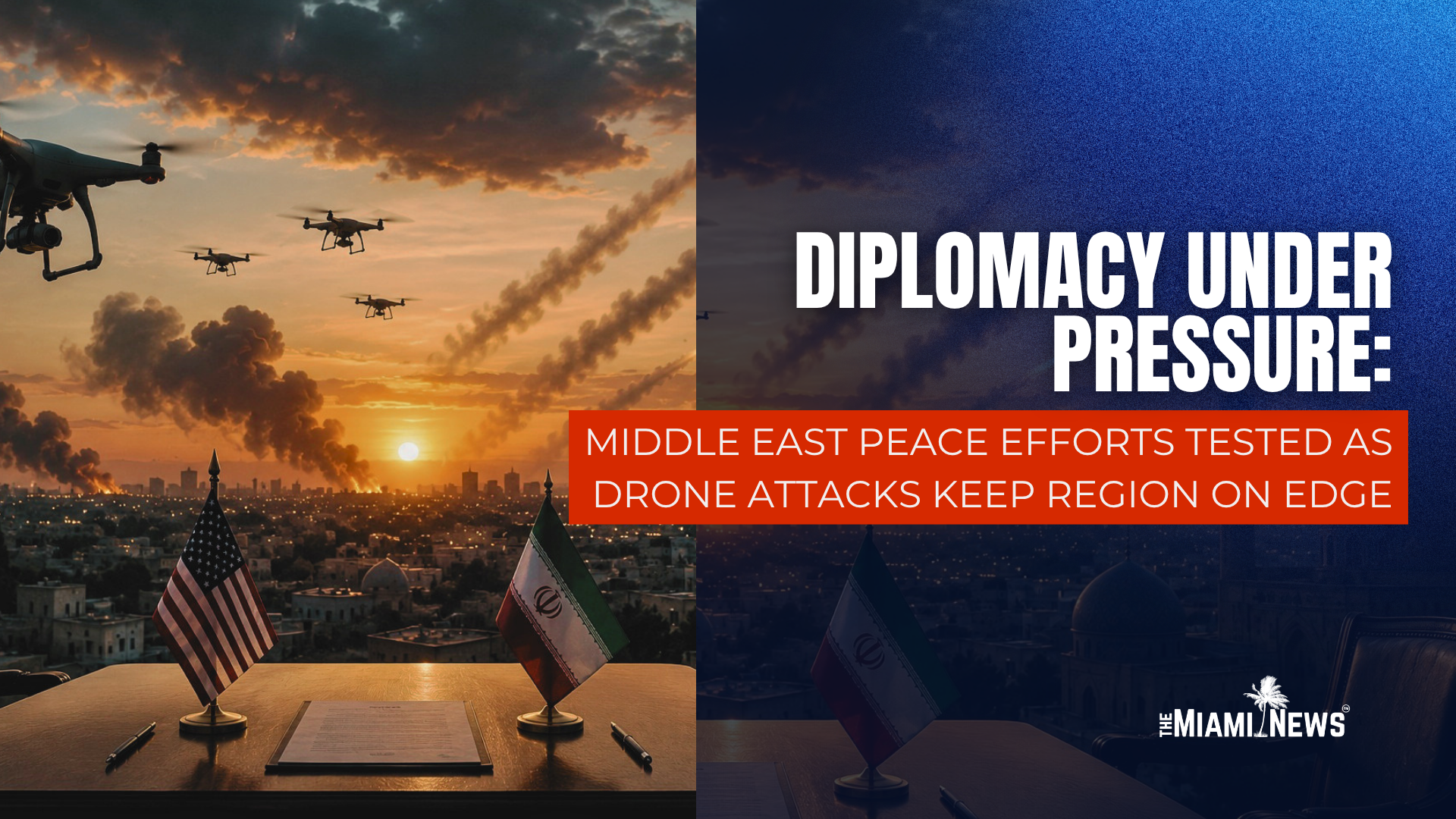
Regional mediators are reporting cautious progress toward renewed negotiations, but fresh drone and missile attacks continue to threaten stability across one of the world’s most volatile regions.
Diplomatic efforts to reduce tensions in the Middle East are showing tentative signs of progress, even as new drone and missile attacks continue to raise fears of a broader conflict. Officials involved in indirect negotiations between Iran, the United States, and several Gulf nations say recent diplomatic discussions have created a narrow opportunity for dialogue. However, continuing attacks targeting military positions, oil infrastructure, and commercial shipping demonstrate just how fragile those efforts remain.
The latest escalation follows a series of military operations involving U.S. and allied forces against Iran-backed militia groups operating across Iraq and Syria. In response, additional missile and drone attacks have been launched against military installations and strategic facilities throughout the region. Air defense systems have intercepted many of the incoming threats, but security analysts warn that even isolated incidents have the potential to trigger a much larger confrontation.
Despite the renewed violence, diplomatic channels remain open. Mediators from Qatar, Oman, and other regional partners continue working behind the scenes to encourage both Washington and Tehran to avoid further escalation. Officials familiar with the discussions describe the atmosphere as cautiously optimistic, saying both sides recognize the economic and strategic consequences of allowing the conflict to expand.
“The priority remains preventing a wider regional war,” said one Middle East security analyst. “No country benefits from prolonged instability, particularly when the global economy is already facing significant challenges.”
Energy security has once again become one of the conflict’s defining concerns. The Strait of Hormuz remains one of the world’s most important shipping routes, carrying a significant share of global oil exports. Increased military activity has forced some commercial shipping companies to alter routes while insurers have raised premiums because of the heightened security risks. Even limited disruptions have contributed to volatility in global energy markets and renewed concerns about inflation.
The growing use of drones has also transformed the nature of modern conflict in the region. Military experts say relatively inexpensive unmanned aircraft have become effective tools for both state and non-state actors, allowing attacks to be carried out with greater precision while reducing direct military exposure. Several countries across the Middle East have strengthened air defense systems in response to the increasing frequency of drone operations.
International organizations continue urging restraint from all parties involved. United Nations officials have repeatedly warned that additional military exchanges could undermine ongoing diplomatic efforts and increase humanitarian risks for civilians living near strategic military sites. Aid organizations have also expressed concern about the long-term impact that continued instability could have on displaced populations and regional economic development.
Financial markets remain highly sensitive to developments in the region. Investors continue monitoring the situation closely as prolonged instability could affect oil prices, shipping costs, global supply chains, and investor confidence. Previous conflicts have demonstrated how quickly geopolitical tensions in the Middle East can influence economies around the world.
History has shown that diplomatic progress often occurs during periods of heightened tension. At the same time, every new military strike increases the possibility that negotiations could collapse before meaningful agreements are reached. The coming weeks will likely determine whether diplomacy can gain enough momentum to reduce hostilities or whether the region will face another cycle of escalating violence.
For now, diplomacy remains active but fragile. Every successful negotiation brings hope for greater stability, while every new attack serves as a reminder that lasting peace requires restraint, cooperation, and continued dialogue among all parties involved.