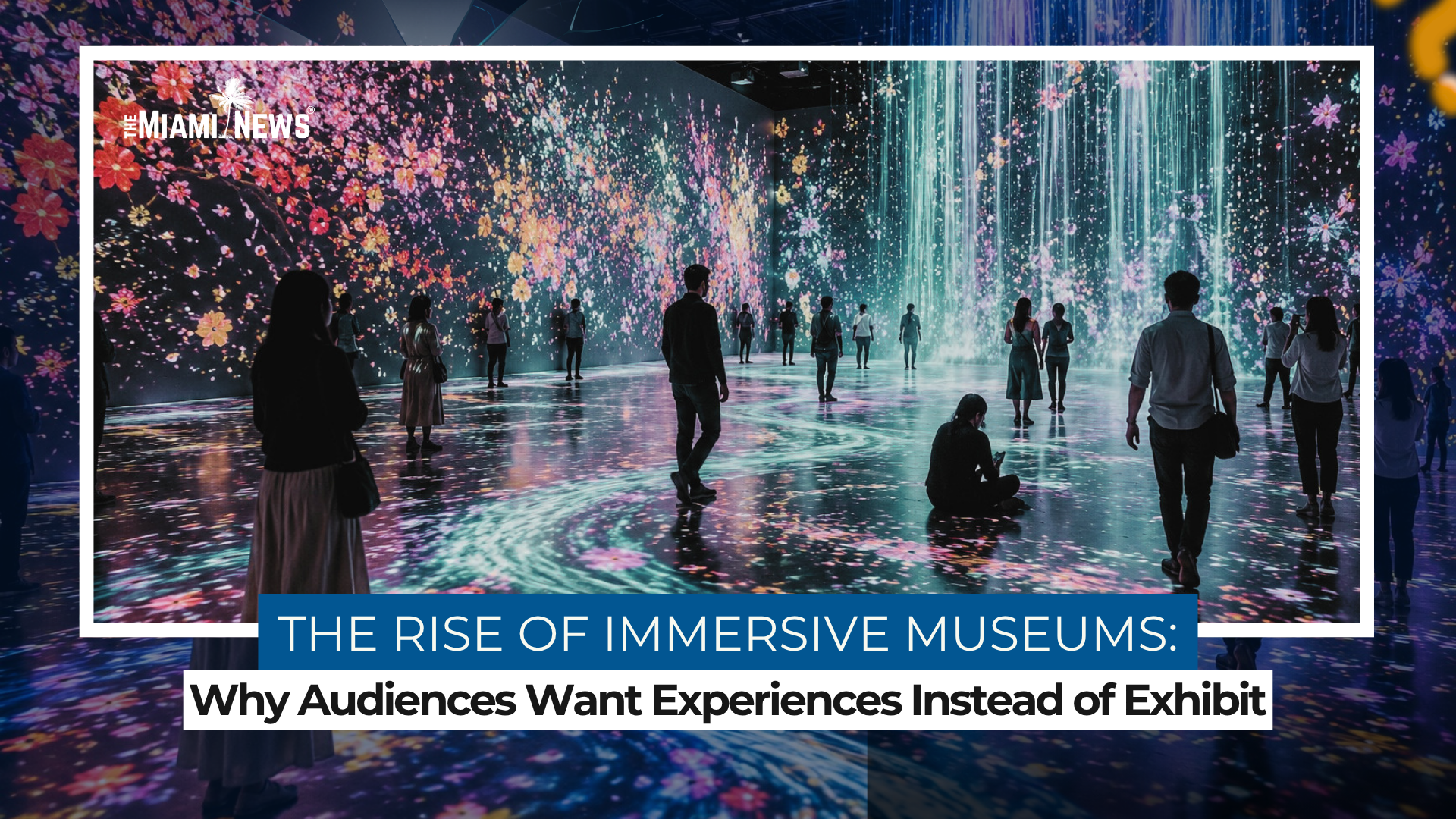
Museums are investing heavily in digital installations, interactive storytelling, and multisensory environments as younger visitors seek experiences rather than traditional gallery visits.
For centuries, museums were built around observation. Visitors stood quietly in front of paintings, sculptures, and artifacts, absorbing culture from a respectful distance. In 2026, that model is rapidly evolving.
Across major cities including London, Paris, New York, Tokyo, and Miami, cultural institutions are embracing immersive exhibitions that invite visitors to become participants rather than spectators. Interactive projections, virtual reality experiences, soundscapes, and responsive environments are transforming museum attendance and attracting younger audiences who grew up in the digital age.
The trend reflects changing consumer expectations. Today’s visitors increasingly value experiences that are shareable, engaging, and emotionally memorable. Museum directors report that immersive exhibitions often attract significantly larger audiences than traditional presentations, particularly among visitors under 35.
“The goal is no longer simply displaying art,” says one museum curator. “It’s creating a journey that people remember long after they leave.”
Technology has become a critical component of that strategy. Advanced projection mapping, artificial intelligence, augmented reality, and spatial audio systems allow institutions to reimagine historical collections in ways that were impossible a decade ago.
Critics initially questioned whether immersive exhibitions risked prioritizing spectacle over substance. However, many museums have found ways to blend scholarship with innovation. Historical narratives can now be experienced through reconstructed environments, while contemporary artists increasingly create works specifically designed for interactive engagement.
The economic impact is also significant. Cultural tourism continues to be a major driver of urban economies, and immersive exhibitions frequently generate strong social media visibility that extends far beyond traditional museum audiences.
Miami’s cultural institutions have been particularly active in this space, benefiting from the city’s growing reputation as a global arts destination. New exhibition formats are helping museums compete not only with each other but with entertainment venues, streaming services, and digital experiences.
As technology continues to evolve, the museum of the future may look less like a gallery and more like a living story.
Art remains at the center of the experience. The difference is that audiences increasingly want to step inside the story rather than simply observe it.