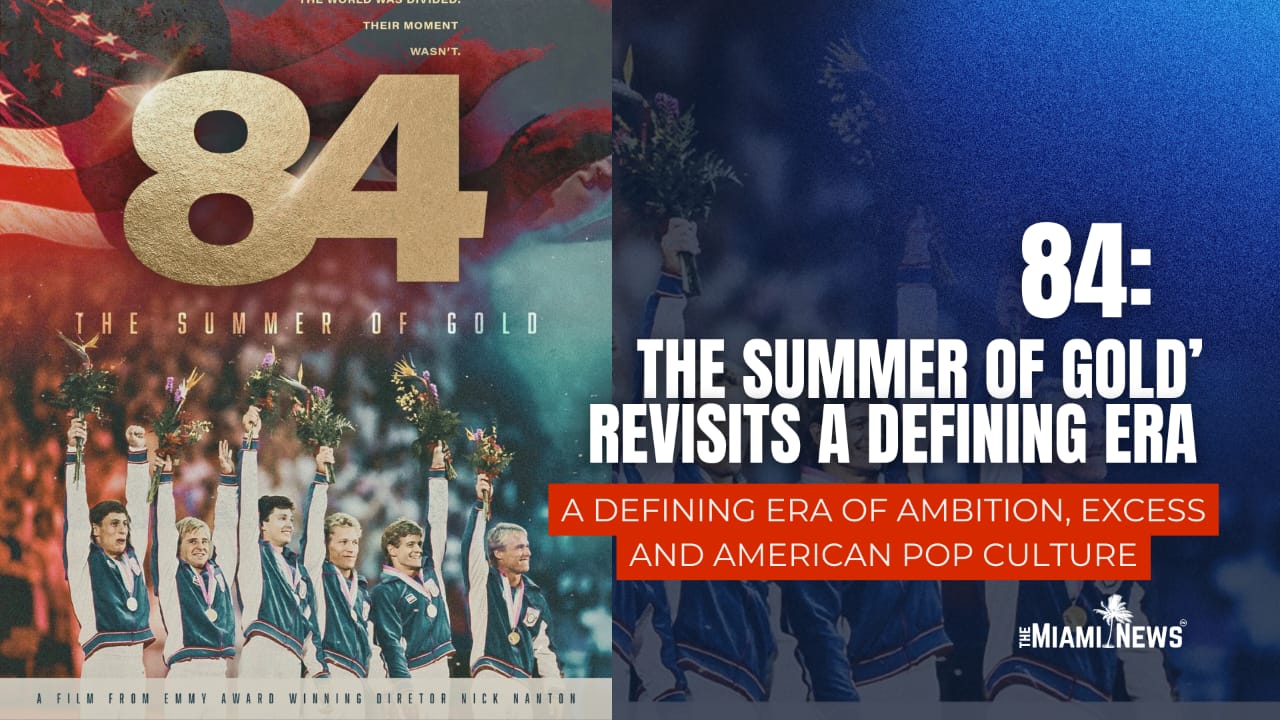
Executive producers Kimberly Ku, Michael Lockwood, Sir Michael Fomkin, Mike Conlon and Kevin Hodes back a nostalgic cinematic project exploring the spirit of 1984 and its lasting cultural legacy.
In an entertainment landscape increasingly driven by nostalgia, 84: The Summer of Gold arrives with a sharper ambition: not simply to revisit the 1980s, but to examine why the year 1984 continues to hold such a powerful grip on American imagination. Backed by executive producers Kimberly Ku, Michael Lockwood, Sir Michael Fomkin, Mike Conlon and Kevin Hodes, the project seeks to capture a singular cultural moment when music, sports, cinema, television and youth identity converged into what many still consider a golden era of modern pop culture.
At a time when audiences are rediscovering analog aesthetics, synth-heavy soundtracks and the rebellious optimism of the Reagan-era entertainment boom, 84: The Summer of Gold positions itself as more than a nostalgia piece. Industry observers say the project taps into a broader appetite for stories that reflect how the 1980s shaped contemporary entertainment, branding and identity politics.
The film’s creative direction appears rooted in the emotional memory of the decade — arcades glowing late into summer nights, blockbuster cinema becoming a communal ritual, and television personalities turning into global icons before the age of social media. But beneath the retro appeal lies a more layered portrait of ambition, aspiration and cultural transformation.
“1984 represented a pivot point,” said one entertainment analyst familiar with the resurgence of ‘80s-inspired storytelling. “It was the moment when pop culture stopped being regional and became truly global. Music videos, cable television and celebrity branding began reshaping how audiences consumed entertainment.”
The executive producing team behind the project reflects a growing trend of experienced financiers and media professionals supporting independent storytelling with broader cultural resonance. While Hollywood studios continue investing heavily in franchise-driven content, smaller and mid-budget productions focused on emotionally grounded storytelling have increasingly found audiences through streaming platforms and international distribution.
That shift has created new opportunities for films like 84: The Summer of Gold, which blend documentary-style reflection with cinematic storytelling. Industry insiders say audiences are no longer satisfied with surface-level nostalgia alone; they want context, emotional authenticity and a deeper understanding of the eras being recreated.
The timing may also be significant. Across fashion, music and television, the aesthetics of the 1980s have returned with remarkable force over the past decade. Streaming hits centered on retro Americana, vinyl sales reaching modern highs and the revival of classic sports and entertainment brands all point toward a wider cultural yearning for periods perceived as simpler, bolder and more optimistic.
Yet the film’s title suggests another layer beneath the neon glow. “The Summer of Gold” evokes achievement, victory and aspiration — themes that resonate strongly in an era marked by economic uncertainty and social fragmentation. In revisiting 1984, the filmmakers appear interested not only in the cultural artifacts of the time, but also in the psychology of a generation raised during one of America’s most commercially confident decades.
For Miami audiences, the project carries additional relevance. South Florida in the 1980s stood at the center of a cultural explosion fueled by music television, nightlife, fashion and sports celebrity. Miami became both a symbol and export of the era’s visual identity — pastel colors, high-performance luxury, nightlife excess and televised glamour.
Film historians note that the decade transformed cities like Miami into international brands long before influencer culture existed. The imagery of the period still shapes advertising campaigns, entertainment marketing and luxury branding worldwide.
“There’s a reason the visual language of the 1980s continues to return,” said a media scholar who studies nostalgia cycles in entertainment. “It represented aspiration. Even when the reality was more complicated, the cultural memory of that era remains tied to confidence, upward mobility and spectacle.”
The executive producers attached to 84: The Summer of Gold appear to understand that duality. Nostalgia alone may attract viewers, but emotional truth sustains them. Successful retrospective storytelling often works because it balances celebration with reflection — allowing audiences to reconnect with the optimism of the past while reconsidering the social and cultural tensions that existed beneath it.
As streaming platforms continue searching for culturally recognizable stories with cross-generational appeal, projects centered on iconic decades have become increasingly valuable. But unlike formulaic reboots, 84: The Summer of Gold appears positioned as a more reflective cinematic experience — one that examines how memory itself becomes part of entertainment.
Whether the project ultimately resonates as a documentary, a cultural essay or a broader cinematic tribute, its executive producing team is betting that audiences remain eager to revisit the emotional architecture of the 1980s.
And in a media era dominated by rapid trends and short attention spans, perhaps that enduring fascination says as much about the present as it does about the past.
Key Figures Behind the Project
- Kimberly Ku — Executive Producer
- Michael Lockwood — Executive Producer
- Sir Michael Fomkin — Executive Producer
- Mike Conlon — Executive Producer
- Kevin Hodes — Executive Producer
Cultural Context: Why the 1980s Keep Returning
- Rise of retro-themed streaming series and films
- Renewed popularity of vinyl records and analog aesthetics
- Fashion revival inspired by 1980s sportswear and nightlife culture
- Continued influence of synth-driven music in film and television soundtracks
- Growing audience appetite for emotionally driven nostalgia storytelling






Be First to Comment