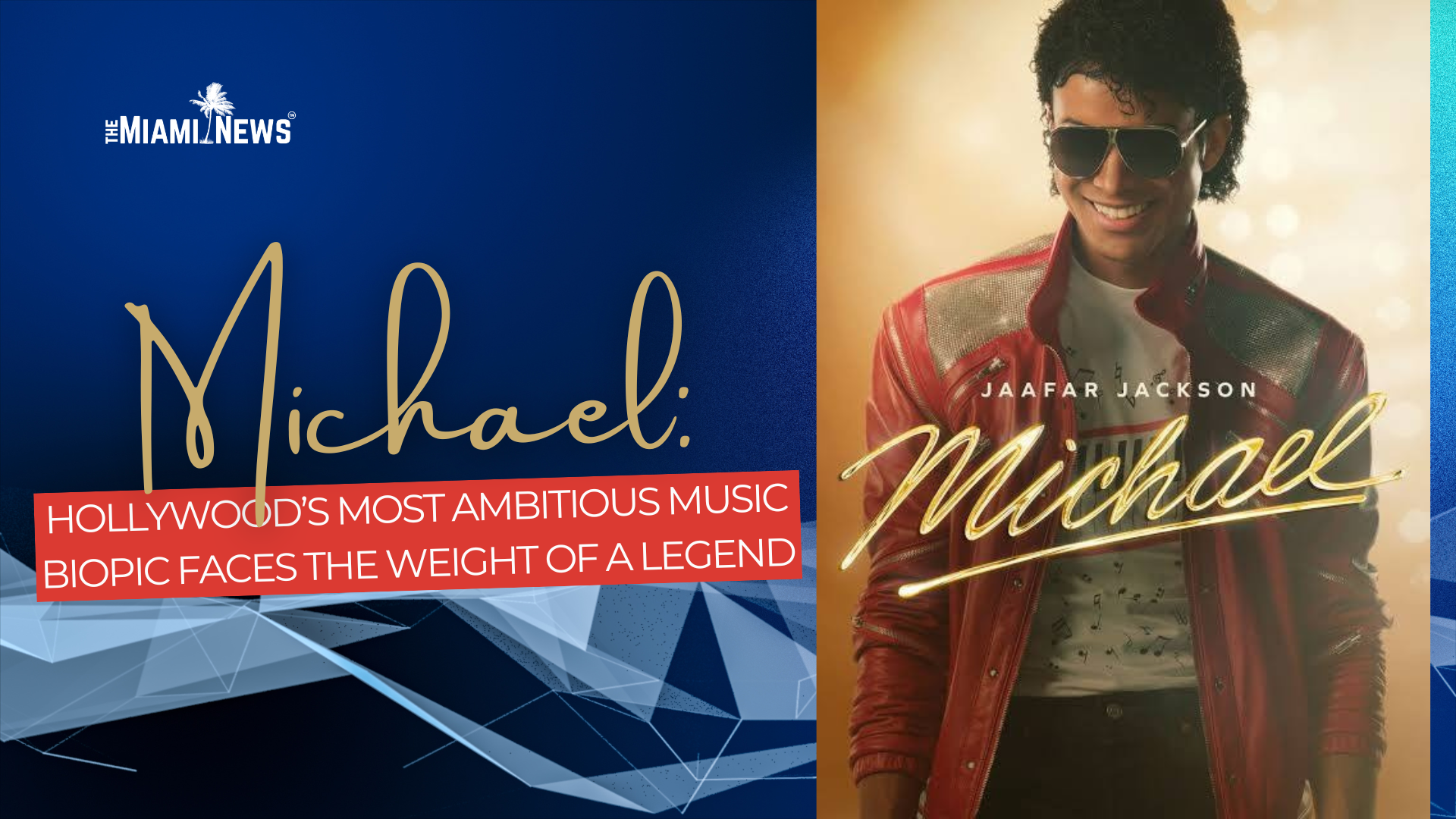
When Michael premiered in Berlin in April, the applause inside the Uber Eats Music Hall reportedly lasted nearly seven minutes. Outside, however, the conversation was far more complicated.
The $150–200 million biographical drama directed by Antoine Fuqua and produced by Bohemian Rhapsody producer Graham King has become one of the most commercially successful films of 2026, earning more than $580 million globally within weeks of release. But the movie’s arrival has also reignited a broader cultural question that Hollywood continues to wrestle with: Can audiences separate artistic genius from personal controversy, and should filmmakers even try?
At the center of the film is Jaafar Jackson, Michael Jackson’s nephew, whose uncanny physical resemblance and stage precision have become the movie’s most universally praised element. Industry analysts say the casting decision may have been the production’s smartest commercial move, giving audiences both authenticity and emotional proximity to the late singer’s legacy.
The film traces Jackson’s rise from his early years in the Jackson 5 through the global superstardom of the Thriller and Bad eras, framing his life as both a triumph of creative ambition and a story shaped by intense family pressure. Colman Domingo portrays Joe Jackson with sharp volatility, while Nia Long plays Katherine Jackson as the family’s emotional center.
Yet what Michael leaves out may ultimately define the public conversation around it.
Reports surrounding the production revealed that references to the 1993 child sexual abuse allegations against Jackson were significantly reduced or removed following legal and production complications during post-production reshoots in 2025. Critics have argued that the film sanitizes major parts of Jackson’s later life in favor of a more commercially accessible narrative.
“The movie wants to preserve the myth more than interrogate the man,” wrote one critic after the Berlin premiere.
That tension reflects a growing challenge for modern biopics. In the streaming era, audiences are no longer satisfied with polished tribute films alone. Recent successes like Oppenheimer and The Social Network demonstrated that viewers increasingly expect moral complexity alongside spectacle. Michael, by contrast, often appears caught between corporate entertainment and historical examination.
Still, commercially, the strategy is working.
The film’s teaser trailer generated more than 100 million views within its first 24 hours online, according to promotional materials from Lionsgate and Universal. Analysts say nostalgia-driven theatrical events remain one of Hollywood’s safest global investments, especially in international markets where Jackson’s popularity remains immense decades after his death.
“Michael Jackson is one of the last truly universal pop stars,” said entertainment strategist Lena Morris of the Global Screen Institute. “You’re talking about an artist whose music transcended language, politics, and geography. That gives this film extraordinary international reach.”
The production itself was unusually ambitious for a music biopic. Fuqua shot elaborate recreations of Jackson’s tours and performances using large-scale practical choreography rather than relying heavily on digital effects. Insiders familiar with the production described the concert sequences as “closer to stadium filmmaking than traditional drama.” The soundtrack reportedly includes songs spanning the Jackson 5 years through Bad.
Hollywood’s recent obsession with music biopics has created a lucrative formula. Films centered on Elvis Presley, Freddie Mercury, Whitney Houston, and Bob Marley have collectively generated billions in box office revenue over the last decade. But Michael enters uniquely sensitive territory because Jackson’s legacy remains culturally unresolved.
Among younger audiences, particularly Gen Z viewers, reactions have been notably mixed. Social media discussions have praised the performances and production scale while simultaneously questioning whether the film meaningfully confronts Jackson’s controversies. Some viewers have interpreted the project as a calculated attempt to restore the singer’s public image for a new generation.
Others argue that the debate itself reflects a broader discomfort with how society consumes celebrity.
“People want perfect icons,” said cultural historian Marcus Ellington. “But the modern public also demands accountability. Those two desires now collide every time Hollywood revisits a complicated figure.”
For the studios involved, however, the numbers may overshadow the criticism. Industry publications have already reported discussions surrounding a possible sequel focused on Jackson’s later career, with producers hinting that unused footage from the original multi-hour cut could support another installment.
If that happens, the filmmakers may face even greater scrutiny.
Jackson’s later years, marked by legal battles, financial instability, media obsession, and physical decline, represent the most controversial chapter of his story. Any sequel would force the franchise to decide whether it intends to remain celebratory entertainment or evolve into something more psychologically and historically complex.
For now, Michael stands as one of 2026’s defining cultural events: a film simultaneously powered by nostalgia, spectacle, commerce, and controversy.
It is, in many ways, the perfect Hollywood product for this moment: emotionally charged, commercially massive, visually polished, and deeply debated.
And perhaps that is the most Michael Jackson outcome imaginable.
Sidebar: Michael by the Numbers
- Director: Antoine Fuqua
- Writer: John Logan
- Lead Actor: Jaafar Jackson
- Estimated Budget: $155–200 million
- Worldwide Gross (so far): Over $580 million
- Release Date: April 24, 2026
- Studios: Lionsgate (U.S.), Universal Pictures (International)
- Most Discussed Topic: The omission of abuse allegations from the film narrative











Be First to Comment